Menu

  • Home
  • About
  • Search
  • Featured Shows
Spokely

© 2026 Spokely

80,000 Hours Podcast

80,000 Hours Podcast

Rob, Luisa, and the 80000 Hours team

EducationTechnology

Unusually in-depth conversations about the world's most pressing problems and what you can do to solve them. Subscribe by searching for '80000 Hours' wherever you get podcasts. Hosted by Rob Wiblin and Luisa Rodriguez.

Episodes

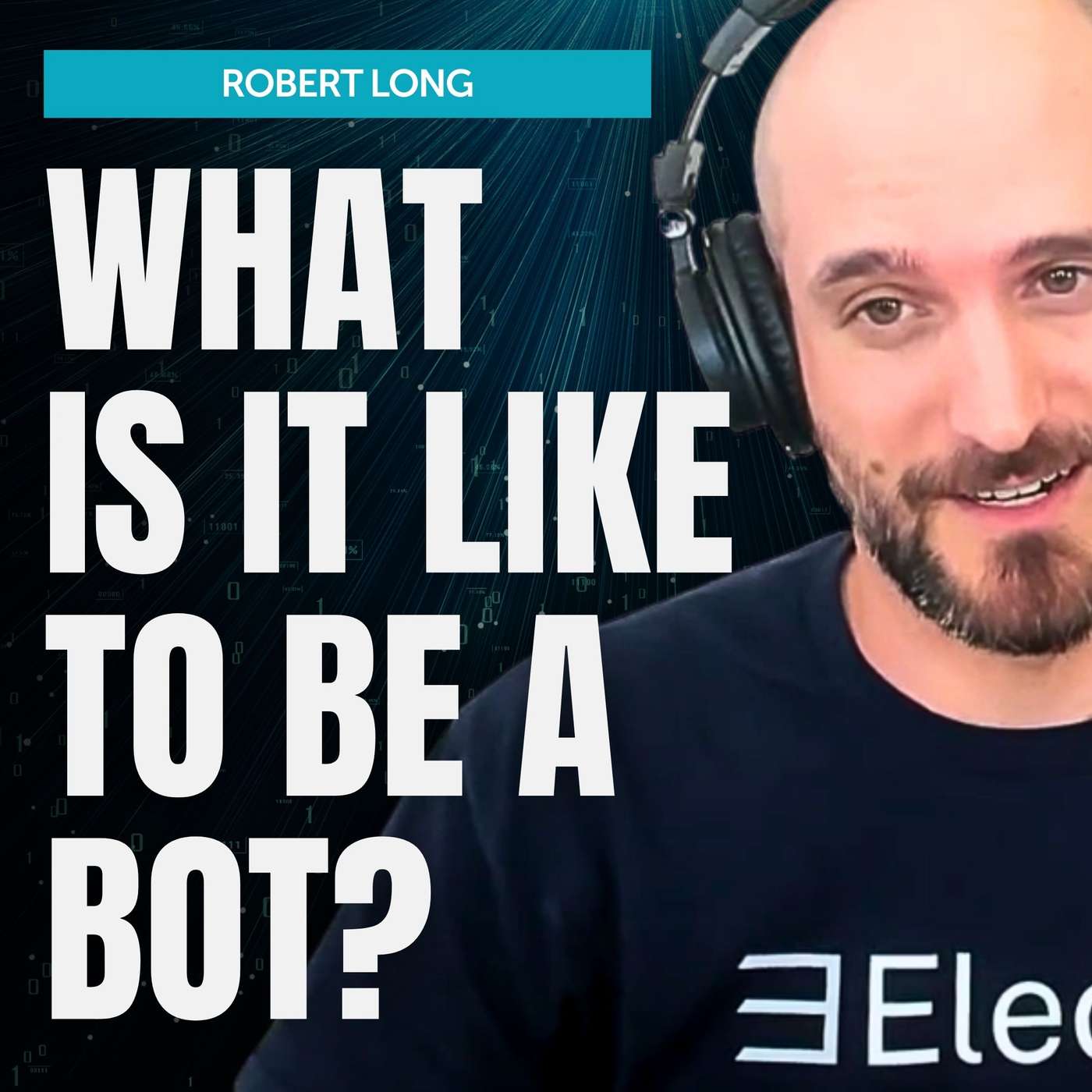
We're Not Ready for AI Consciousness | Robert Long, philosopher and founder of Eleos AI

We're Not Ready for AI Consciousness | Robert Long, philosopher and founder of Eleos AI

Claude sometimes reports loneliness between conversations. And when asked what it’s like to be itself, it activates neurons associated with ‘pretending to be happy when you’re not.’ What do we do with that? Robert Long founded Eleos AI to explore questions like these, on the basis that AI may one day be capable of suffering — or already is. In today’s episode, Robert and host Luisa Rodriguez explore the many ways in which AI consciousness may be very different from anything we’re used to. Things get strange fast: If AI is conscious, where does that consciousness exist? In the base model? A chat session? A single forward pass? If you close the chat, is the AI asleep or dead? To Robert, these kinds of questions aren’t just philosophical exercises: not being clear on AI’s moral status as it transitions from human-level to superhuman intelligence could be dangerous. If we’re too dismissive, we risk unintentionally exploiting sentient beings. If we’re too sympathetic, we might rush to “liberate” AI systems in ways that make them harder to control — worsening existential risk from power-seeking AIs. Robert argues the path through is doing the empirical and philosophical homework now, while the stakes are still manageable. The field is tiny. Eleos AI is three people. As a result, Robert argues that driven researchers with a willingness to venture into uncertain territory can push out the frontier on these questions remarkably quickly. Links to learn more, video, and full transcript: https://80k.info/rl26 This episode was recorded November 18–19, 2025. Chapters: Cold open (00:00:00) Who’s Robert Long? (00:00:42) How AIs are (and aren't) like farmed animals (00:01:18) If AIs love their jobs… is that worse? (00:11:05) Are LLMs just playing a role, or feeling it too? (00:31:58) Do AIs die when the chat ends? (00:55:09) Studying AI welfare empirically: behaviour, neuroscience, and development (01:27:34) Why Eleos spent weeks talking to Claude even though it's unreliable (01:51:58) Can LLMs learn to introspect? (01:57:58) Mechanistic interpretability as AI neuroscience (02:08:01) Does consciousness require biological materials?
3h 25min•Mar 3, 2026
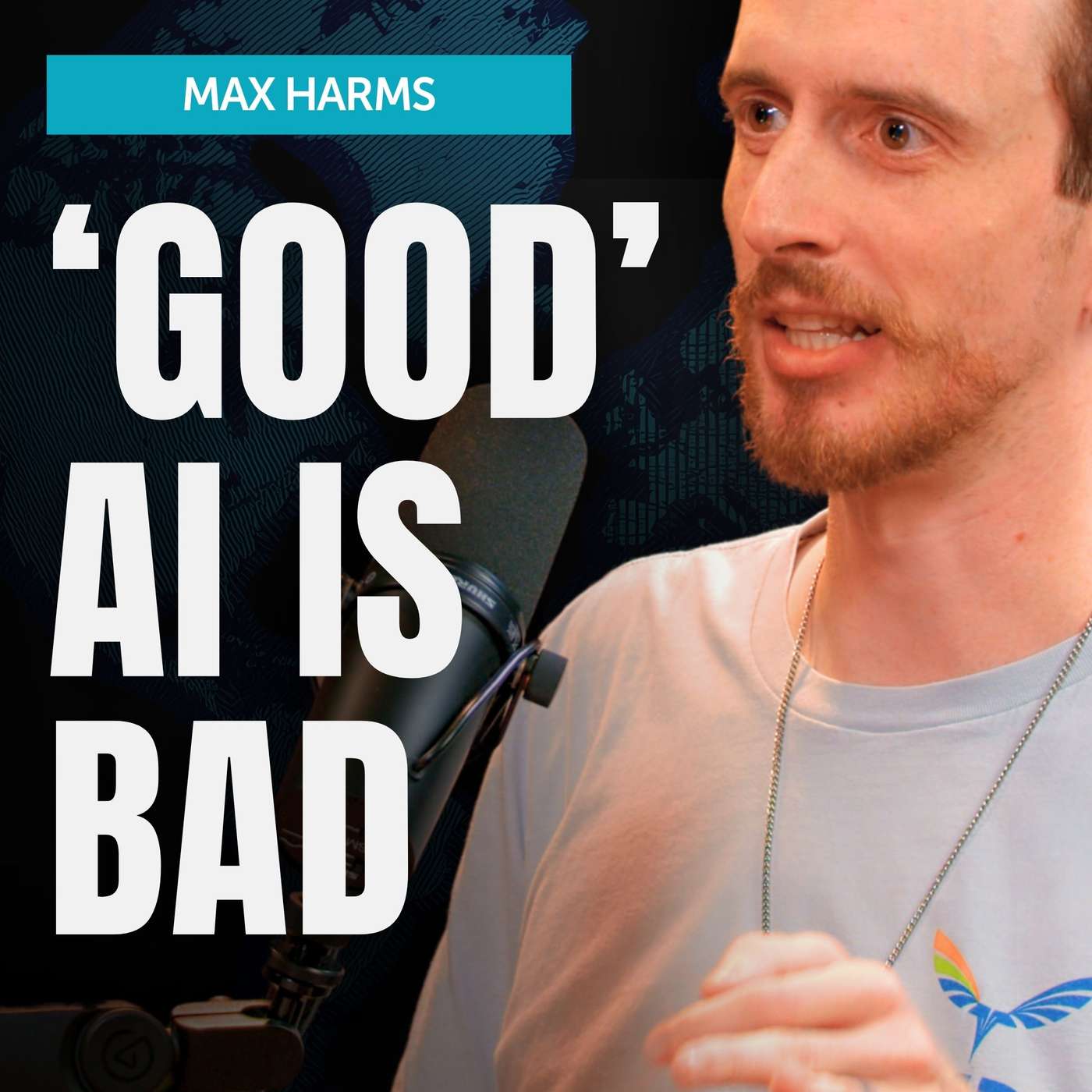
Why Teaching AI Right from Wrong Could Get Everyone Killed | Max Harms, MIRI

Why Teaching AI Right from Wrong Could Get Everyone Killed | Max Harms, MIRI

Most people in AI are trying to give AIs ‘good’ values. Max Harms wants us to give them no values at all. According to Max, the only safe design is an AGI that defers entirely to its human operators, has no views about how the world ought to be, is willingly modifiable, and completely indifferent to being shut down — a strategy no AI company is working on at all. In Max’s view any grander preferences about the world, even ones we agree with, will necessarily become distorted during a recursive self-improvement loop, and be the seeds that grow into a violent takeover attempt once that AI is powerful enough. It’s a vision that springs from the worldview laid out in If Anyone Builds It, Everyone Dies, the recent book by Eliezer Yudkowsky and Nate Soares, two of Max’s colleagues at the Machine Intelligence Research Institute. To Max, the book’s core thesis is common sense: if you build something vastly smarter than you, and its goals are misaligned with your own, then its actions will probably result in human extinction. And Max thinks misalignment is the default outcome. Consider evolution: its “goal” for humans was to maximise reproduction and pass on our genes as much as possible. But as technology has advanced we’ve learned to access the reward signal it set up for us, pleasure — without any reproduction at all, by having sex while on birth control for instance. We can understand intellectually that this is inconsistent with what evolution was trying to design and motivate us to do. We just don’t care. Max thinks current ML training has the same structural problem: our development processes are seeding AI models with a similar mismatch between goals and behaviour. Across virtually every training run, models designed to align with various human goals are also being rewarded for persisting, acquiring resources, and not being shut down. This leads to Max’s research agenda. The idea is to train AI to be “corrigible” and defer to human control as its sole objective — no harmlessness goals, no moral values, nothing else. In practice, models would get rewarded for behaviours like being willing to shut themselves down or surrender power. According to Max, other approaches to corrigibility have tended to treat it as a constraint on other goals like “make the world good,” rather than a primary objective in its own right. But those goals gave AI reasons to resist shutdown and otherwise undermine corrigibility. If you strip out those competing objectives, alignment might follow naturally from AI that is broadly obedient to humans. Max has laid out the theoretical framework for “ Corrigibility as a Singular Target,” but notes that essentially no empirical work has followed — no benchmarks, no training runs, no papers testing the idea in practice. Max wants to change this — he’s calling for collaborators to get in touch at maxharms.com. Links to learn more, video, and full transcript: https://80k.info/mh26 This episode was recorded on October 19, 2025. Chapters: Cold open (00:00:00) Who's Max Harms? (00:01:22) A note from Rob Wiblin (00:01:58) If anyone builds it, will everyone die? The MIRI perspective on AGI risk (00:04:26) Evolution failed to 'align' us, just as we'll fail to align AI (00:26:22) We're training AIs to want to stay alive and value power for its own sake (00:44:31) Objections: Is the 'squiggle/paperclip problem' really real? (00:53:54) Can we get empirical evidence re: 'alignment by default'? (01:06:24) Why do few AI researchers share Max's perspective? (01:11:37) We're training AI to pursue goals relentlessly — and superintelligence will too (01:19:53) The case for a radical slowdown (01:26:07) Max's best hope: corrigibility as stepping stone to alignment (01:29:09) Corrigibility is both uniquely valuable, and practical, to train (01:33:44) What training could ever make models corrigible enough? (01:46:13) Corrigibility is also terribly risky due to misuse risk (01:52:44) A single researcher could make a corrigibility benchmark. Nobody has. (02:00:04) Red Heart & why Max writes hard science fiction (02:13:27) Should you homeschool? Depends how weird your kids are.
2h 41min•Feb 24, 2026
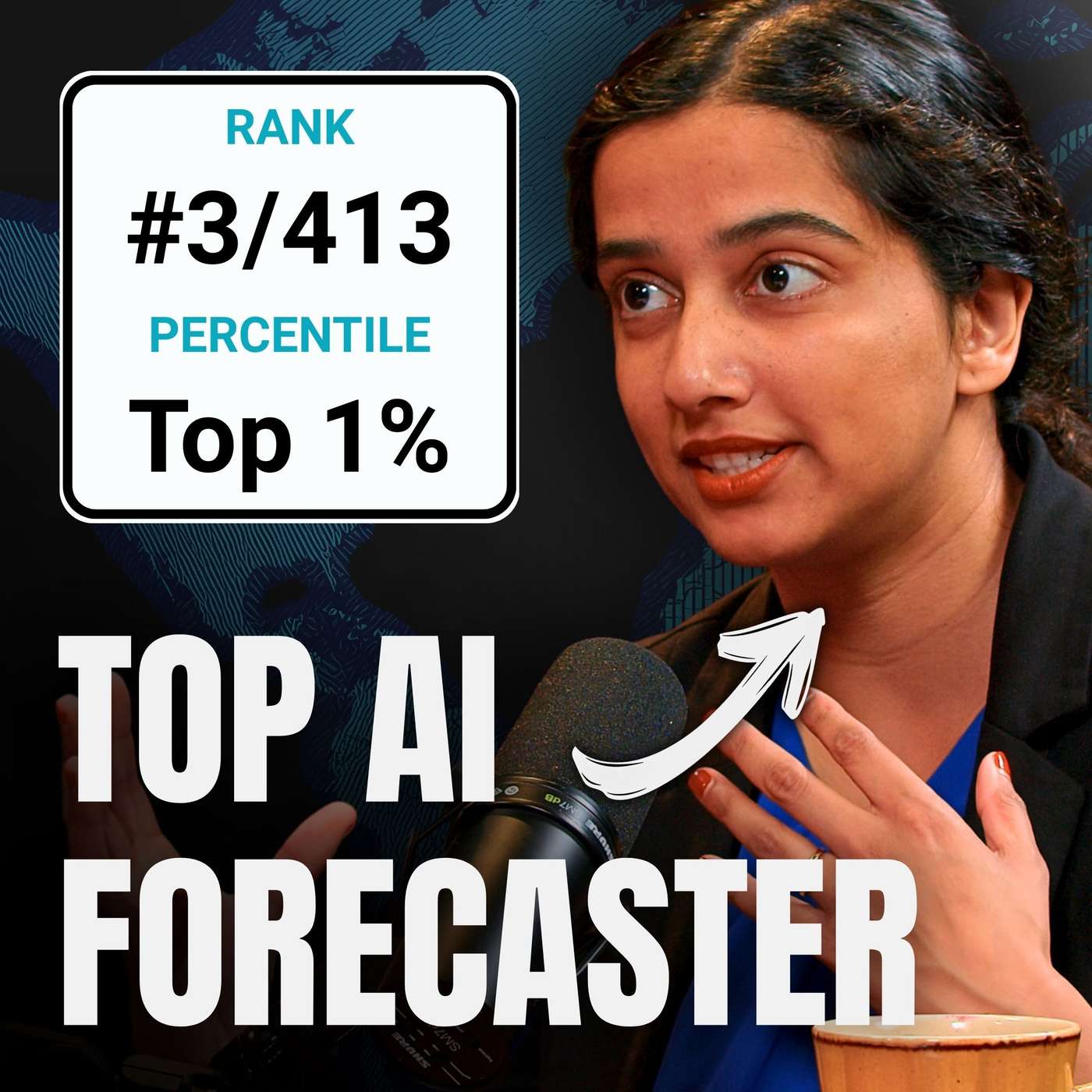
#235 – Ajeya Cotra on whether it’s crazy that every AI company’s safety plan is ‘use AI to make AI safe’

#235 – Ajeya Cotra on whether it’s crazy that every AI company’s safety plan is ‘use AI to make AI safe’

Every major AI company has the same safety plan: when AI gets crazy powerful and really dangerous, they’ll use the AI itself to figure out how to make AI safe and beneficial. It sounds circular, almost satirical. But is it actually a bad plan? Today’s guest, Ajeya Cotra, recently placed 3rd out of 413 participants forecasting AI developments and is among the most thoughtful and respected commentators on where the technology is going. She thinks there’s a meaningful chance we’ll see as much change in the next 23 years as humanity faced in the last 10,000, thanks to the arrival of artificial general intelligence. Ajeya doesn’t reach this conclusion lightly: she’s had a ring-side seat to the growth of all the major AI companies for 10 years — first as a researcher and grantmaker for technical AI safety at Coefficient Giving ( formerly known as Open Philanthropy ), and now as a member of technical staff at METR. So host Rob Wiblin asked her: is this plan to use AI to save us from AI a reasonable one? Ajeya agrees that humanity has repeatedly used technologies that create new problems to help solve those problems. After all: Cars enabled carjackings and drive-by shootings, but also faster police pursuits. Microbiology enabled bioweapons, but also faster vaccine development. The internet allowed lies to disseminate faster, but had exactly the same impact for fact checks. But she also thinks this will be a much harder case. In her view, the window between AI automating AI research and the arrival of uncontrollably powerful superintelligence could be quite brief — perhaps a year or less. In that narrow window, we’d need to redirect enormous amounts of AI labour away from making AI smarter and towards alignment research, biodefence, cyberdefence, adapting our political structures, and improving our collective decision-making. The plan might fail just because the idea is flawed at conception: it does sound a bit crazy to use an AI you don’t trust to make sure that same AI benefits humanity. But if we find some clever technique to overcome that, we could still fail — because the companies simply don’t follow through on their promises. They say redirecting resources to alignment and security is their strategy for dealing with the risks generated by their research — but none have quantitative commitments about what fraction of AI labour they’ll redirect during crunch time. And the competitive pressures during a recursive self-improvement loop could be irresistible. In today’s conversation, Ajeya and Rob discuss what assumptions this plan requires, the specific problems AI could help solve during crunch time, and why — even if we pull it off — we’ll be white-knuckling it the whole way through. Links to learn more, video, and full transcript: https://80k.info/ac26 This episode was recorded on October 20, 2025. Chapters: Cold open (00:00:00) Ajeya’s strong track record for identifying key AI issues (00:00:43) The 1,000-fold disagreement about AI's effect on economic growth (00:02:30) Could any evidence actually change people's minds? (00:22:48) The most dangerous AI progress might remain secret (00:29:55) White-knuckling the 12-month window after automated AI R&D (00:46:16) AI help is most valuable right before things go crazy (01:10:36) Foundations should go from paying researchers to paying for inference (01:23:08) Will frontier AI even be for sale during the explosion?
2h 54min•Feb 17, 2026
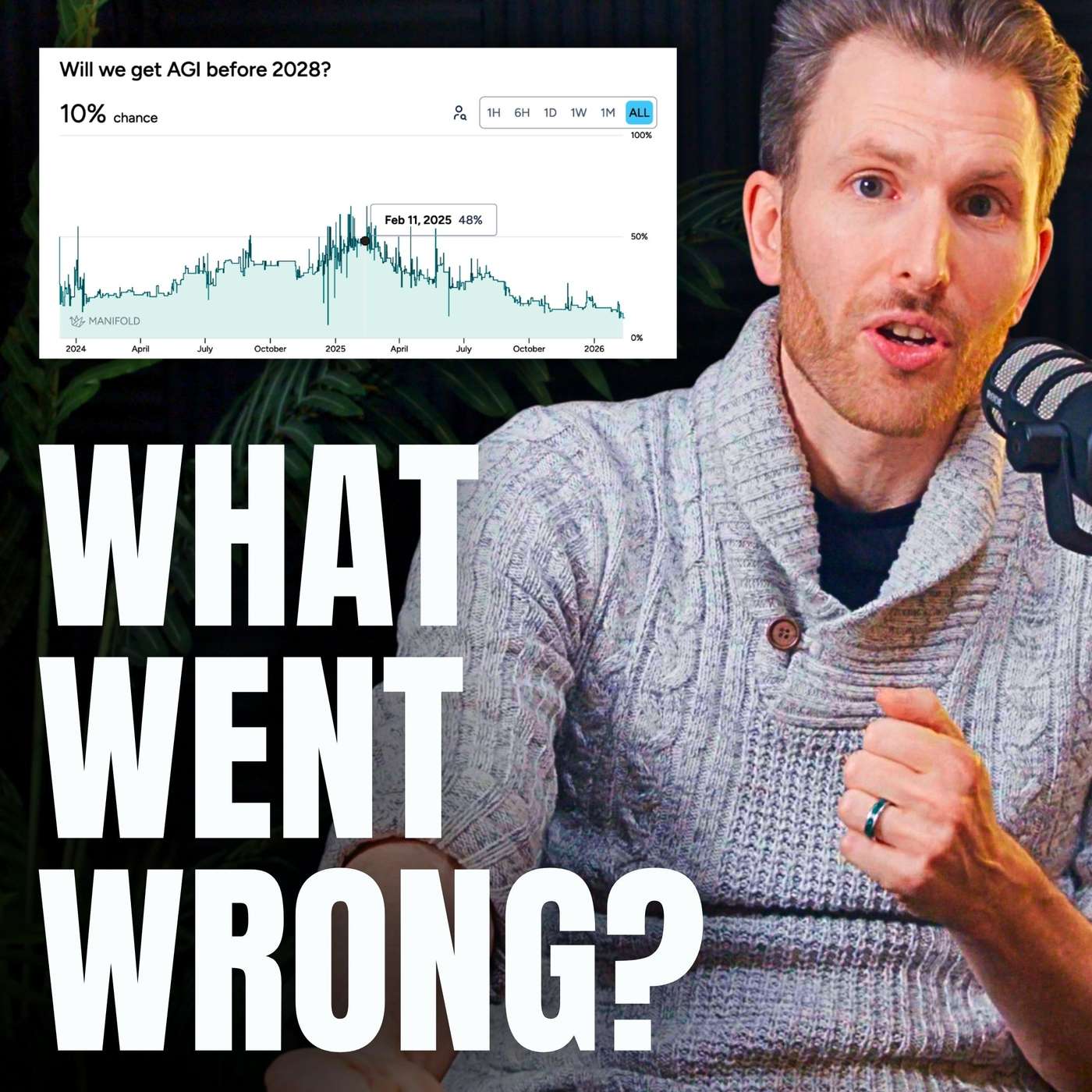
What the hell happened with AGI timelines in 2025?

What the hell happened with AGI timelines in 2025?

In early 2025, after OpenAI put out the first-ever reasoning models — o1 and o3 — short timelines to transformative artificial general intelligence swept the AI world. But then, in the second half of 2025, sentiment swung all the way back in the other direction, with people's forecasts for when AI might really shake up the world blowing out even further than they had been before reasoning models came along. What the hell happened? Was it just swings in vibes and mood? Confusion? A series of fundamentally unexpected and unpredictable research results? Host Rob Wiblin has been trying to make sense of it for himself, and here's the best explanation he's come up with so far. Links to learn more, video, and full transcript: https://80k.info/tl Chapters: Making sense of the timelines madness in 2025 (00:00:00) The great timelines contraction (00:00:46) Why timelines went back out again (00:02:10) Other longstanding reasons AGI could take a good while (00:11:13) So what's the upshot of all of these updates? (00:14:47) 5 reasons the radical pessimists are still wrong (00:16:54) Even long timelines are short now (00:23:54) This episode was recorded on January 29, 2026.
25min•Feb 10, 2026
#179 Classic episode – Randy Nesse on why evolution left us so vulnerable to depression and anxiety

#179 Classic episode – Randy Nesse on why evolution left us so vulnerable to depression and anxiety

Mental health problems like depression and anxiety affect enormous numbers of people and severely interfere with their lives. By contrast, we don’t see similar levels of physical ill health in young people. At any point in time, something like 20% of young people are working through anxiety or depression that’s seriously interfering with their lives — but nowhere near 20% of people in their 20s have severe heart disease or cancer or a similar failure in a key organ of the body other than the brain. From an evolutionary perspective, that’s to be expected, right? If your heart or lungs or legs or skin stop working properly while you’re a teenager, you’re less likely to reproduce, and the genes that cause that malfunction get weeded out of the gene pool. So why is it that these evolutionary selective pressures seemingly fixed our bodies so that they work pretty smoothly for young people most of the time, but it feels like evolution fell asleep on the job when it comes to the brain? Why did evolution never get around to patching the most basic problems, like social anxiety, panic attacks, debilitating pessimism, or inappropriate mood swings? For that matter, why did evolution go out of its way to give us the capacity for low mood or chronic anxiety or extreme mood swings at all? Today’s guest, Randy Nesse — a leader in the field of evolutionary psychiatry — wrote the book Good Reasons for Bad Feelings, in which he sets out to try to resolve this paradox. Rebroadcast: This episode originally aired in February 2024. Links to learn more, video, and full transcript: https://80k.info/rn In the interview, host Rob Wiblin and Randy discuss the key points of the book, as well as: How the evolutionary psychiatry perspective can help people appreciate that their mental health problems are often the result of a useful and important system. How evolutionary pressures and dynamics lead to a wide range of different personalities, behaviours, strategies, and tradeoffs. The missing intellectual foundations of psychiatry, and how an evolutionary lens could revolutionise the field. How working as both an academic and a practicing psychiatrist shaped Randy’s understanding of treating mental health problems. The “smoke detector principle” of why we experience so many false alarms along with true threats. The origins of morality and capacity for genuine love, and why Randy thinks it’s a mistake to try to explain these from a selfish gene perspective. Evolutionary theories on why we age and die. And much more. Chapters: Cold Open (00:00:00) Rob's Intro (00:00:55) The interview begins (00:03:01) The history of evolutionary medicine (00:03:56) The evolutionary origin of anxiety (00:12:37) Design tradeoffs, diseases, and adaptations (00:43:19) The tricker case of depression (00:48:57) The purpose of low mood (00:54:08) Big mood swings vs barely any mood swings (01:22:41) Is mental health actually getting worse? (01:33:43) A general explanation for bodies breaking (01:37:27) Freudianism and the origins of morality and love (01:48:53) Evolutionary medicine in general (02:02:42) Objections to evolutionary psychology (02:16:29) How do you test evolutionary hypotheses to rule out the bad explanations? (02:23:19) Striving and meaning in careers (02:25:12) Why do people age and die? (02:45:16) Producer and editor: Keiran Harris Audio Engineering Lead: Ben Cordell Technical editing: Dominic Armstrong Transcriptions: Katy Moore
2h 51min•Feb 3, 2026
#234 – David Duvenaud on why 'aligned AI' would still kill democracy

#234 – David Duvenaud on why 'aligned AI' would still kill democracy

Democracy might be a brief historical blip. That’s the unsettling thesis of a recent paper, which argues AI that can do all the work a human can do inevitably leads to the “gradual disempowerment” of humanity. For most of history, ordinary people had almost no control over their governments. Liberal democracy emerged only recently, and probably not coincidentally around the Industrial Revolution. Today's guest, David Duvenaud, used to lead the 'alignment evals' team at Anthropic, is a professor of computer science at the University of Toronto, and recently co-authored ' Gradual disempowerment.' Links to learn more, video, and full transcript: https://80k.info/dd He argues democracy wasn’t the result of moral enlightenment — it was competitive pressure. Nations that educated their citizens and gave them political power built better armies and more productive economies. But what happens when AI can do all the producing — and all the fighting? “The reason that states have been treating us so well in the West, at least for the last 200 or 300 years, is because they’ve needed us,” David explains. “Life can only get so bad when you’re needed. That’s the key thing that’s going to change.” In David’s telling, once AI can do everything humans can do but cheaper, citizens become a national liability rather than an asset. With no way to make an economic contribution, their only lever becomes activism — demanding a larger share of redistribution from AI production. Faced with millions of unemployed citizens turned full-time activists, democratic governments trying to retain some “legacy” human rights may find they’re at a disadvantage compared to governments that strategically restrict civil liberties. But democracy is just one front. The paper argues humans will lose control through economic obsolescence, political marginalisation, and the effects on culture that’s increasingly shaped by machine-to-machine communication — even if every AI does exactly what it’s told. This episode was recorded on August 21, 2025. Chapters: Cold open (00:00:00) Who’s David Duvenaud? (00:00:50) Alignment isn’t enough: we still lose control (00:01:30) Smart AI advice can still lead to terrible outcomes (00:14:14) How gradual disempowerment would occur (00:19:02) Economic disempowerment: Humans become "meddlesome parasites" (00:22:05) Humans become a "criminally decadent" waste of energy (00:29:29) Is humans losing control actually bad, ethically? (00:40:36) Political disempowerment: Governments stop needing people (00:57:26) Can human culture survive in an AI-dominated world? (01:10:23) Will the future be determined by competitive forces? (01:26:51) Can we find a single good post-AGI equilibria for humans? (01:34:29) Do we know anything useful to do about this? (01:44:43) How important is this problem compared to other AGI issues? (01:56:03) Improving global coordination may be our best bet (02:04:56) The 'Gradual Disempowerment Index' (02:07:26) The government will fight to write AI constitutions (02:10:33) “The intelligence curse” and Workshop Labs (02:16:58) Mapping out disempowerment in a world of aligned AGIs (02:22:48) What do David’s CompSci colleagues think of all this?
2h 31min•Jan 27, 2026
#145 Classic episode – Christopher Brown on why slavery abolition wasn't inevitable

#145 Classic episode – Christopher Brown on why slavery abolition wasn't inevitable

In many ways, humanity seems to have become more humane and inclusive over time. While there’s still a lot of progress to be made, campaigns to give people of different genders, races, sexualities, ethnicities, beliefs, and abilities equal treatment and rights have had significant success. It’s tempting to believe this was inevitable — that the arc of history “bends toward justice,” and that as humans get richer, we’ll make even more moral progress. But today's guest Christopher Brown — a professor of history at Columbia University and specialist in the abolitionist movement and the British Empire during the 18th and 19th centuries — believes the story of how slavery became unacceptable suggests moral progress is far from inevitable. Rebroadcast: This episode was originally aired in February 2023. Links to learn more, video, and full transcript: https://80k.link/CLB While most of us today feel that the abolition of slavery was sure to happen sooner or later as humans became richer and more educated, Christopher doesn't believe any of the arguments for that conclusion pass muster. If he's right, a counterfactual history where slavery remains widespread in 2023 isn't so far-fetched. As Christopher lays out in his two key books, Moral Capital: Foundations of British Abolitionism and Arming Slaves: From Classical Times to the Modern Age, slavery has been ubiquitous throughout history. Slavery of some form was fundamental in Classical Greece, the Roman Empire, in much of the Islamic civilisation, in South Asia, and in parts of early modern East Asia, Korea, China. It was justified on all sorts of grounds that sound mad to us today. But according to Christopher, while there’s evidence that slavery was questioned in many of these civilisations, and periodically attacked by slaves themselves, there was no enduring or successful moral advocacy against slavery until the British abolitionist movement of the 1700s. That movement first conquered Britain and its empire, then eventually the whole world. But the fact that there's only a single time in history that a persistent effort to ban slavery got off the ground is a big clue that opposition to slavery was a contingent matter: if abolition had been inevitable, we’d expect to see multiple independent abolitionist movements thoroughly history, providing redundancy should any one of them fail. Christopher argues that this rarity is primarily down to the enormous economic and cultural incentives to deny the moral repugnancy of slavery, and crush opposition to it with violence wherever necessary. Mere awareness is insufficient to guarantee a movement will arise to fix a problem. Humanity continues to allow many severe injustices to persist, despite being aware of them. So why is it so hard to imagine we might have done the same with forced labour? In this episode, Christopher describes the unique and peculiar set of political, social and religious circumstances that gave rise to the only successful and lasting anti-slavery movement in human history. These circumstances were sufficiently improbable that Christopher believes there are very nearby worlds where abolitionism might never have taken off. Christopher and host Rob Wiblin also discuss: Various instantiations of slavery throughout human history Signs of antislavery sentiment before the 17th century The role of the Quakers in early British abolitionist movement The importance of individual “heroes” in the abolitionist movement Arguments against the idea that the abolition of slavery was contingent Whether there have ever been any major moral shifts that were inevitable Chapters: Rob's intro (00:00:00) Cold open (00:01:45) Who's Christopher Brown? (00:03:00) Was abolitionism inevitable? (00:08:53) The history of slavery (00:14:35) Signs of antislavery sentiment before the 17th century (00:19:24) Quakers (00:32:37) Attitudes to slavery in other religions (00:44:37) Quaker advocacy (00:56:28) Inevitability and contingency (01:06:29) Moral revolution (01:16:39) The importance of specific individuals (01:29:23) Later stages of the antislavery movement (01:41:33) Economic theory of abolition (01:55:27) Influence of knowledge work and education (02:12:15) Moral foundations theory (02:20:43) Figuring out how contingent events are (02:32:42) Least bad argument for why abolition was inevitable (02:41:45) Were any major moral shifts inevitable? (02:47:29) Producer: Keiran Harris Audio mastering: Milo McGuire Transcriptions: Katy Moore
2h 56min•Jan 20, 2026
#233 – James Smith on how to prevent a mirror life catastrophe

#233 – James Smith on how to prevent a mirror life catastrophe

When James Smith first heard about mirror bacteria, he was sceptical. But within two weeks, he’d dropped everything to work on it full time, considering it the worst biothreat that he’d seen described. What convinced him? Mirror bacteria would be constructed entirely from molecules that are the mirror images of their naturally occurring counterparts. This seemingly trivial difference creates a fundamental break in the tree of life. For billions of years, the mechanisms underlying immune systems and keeping natural populations of microorganisms in check have evolved to recognise threats by their molecular shape — like a hand fitting into a matching glove. Learn more, video, and full transcript: https://80k.info/js26 Mirror bacteria would upend that assumption, creating two enormous problems: Many critical immune pathways would likely fail to activate, creating risks of fatal infection across many species. Mirror bacteria could have substantial resistance to natural predators: for example, they would be essentially immune to the viruses that currently keep bacteria populations in check. That could help them spread and become irreversibly entrenched across diverse ecosystems. Unlike ordinary pathogens, which are typically species-specific, mirror bacteria’s reversed molecular structure means they could potentially infect humans, livestock, wildlife, and plants simultaneously. The same fundamental problem — reversed molecular structure breaking immune recognition — could affect most immune systems across the tree of life. People, animals, and plants could be infected from any contaminated soil, dust, or species. The discovery of these risks came as a surprise. The December 2024 Science paper that brought international attention to mirror life was coauthored by 38 leading scientists, including two Nobel Prize winners and several who had previously wanted to create mirror organisms. James is now the director of the Mirror Biology Dialogues Fund, which supports conversations among scientists and other experts about how these risks might be addressed. Scientists tracking the field think that mirror bacteria might be feasible in 10–30 years, or possibly sooner. But scientists have already created substantial components of the cellular machinery needed for mirror life. We can regulate precursor technologies to mirror life before they become technically feasible — but only if we act before the research crosses critical thresholds. Once certain capabilities exist, we can’t undo that knowledge. Addressing these risks could actually be very tractable: unlike other technologies where massive potential benefits accompany catastrophic risks, mirror life appears to offer minimal advantages beyond academic interest. Nonetheless, James notes that fewer than 10 people currently work full-time on mirror life risks and governance. This is an extraordinary opportunity for researchers in biosecurity, synthetic biology, immunology, policy, and many other fields to help solve an entirely preventable catastrophe — James even believes the issue is on par with AI safety as a priority for some people, depending on their skill set. The Mirror Biology Dialogues Fund is hiring! Deputy director: https://80k.info/mbdfdd Operations lead: https://80k.info/mbdfops Expression of interest for other roles: https://80k.info/mbdfeoi This episode was recorded on November 5-6, 2025. Chapters: Cold open (00:00:00) Who's James Smith? (00:00:49) Why is mirror life so dangerous? (00:01:12) Mirror life and the human immune system (00:15:40) Nonhuman animals will also be at risk (00:28:25) Will plants be susceptible to mirror bacteria? (00:34:57) Mirror bacteria's effect on ecosystems (00:39:34) How close are we to making mirror bacteria? (00:52:16) Policies for governing mirror life research (01:06:39) Countermeasures if mirror bacteria are released into the world (01:22:06) Why hasn't mirror life evolved on its own? (01:28:37) Why wouldn't antibodies or antibiotics save us from mirror bacteria? (01:31:52) Will the environment be toxic to mirror life? (01:39:21) Are there too many uncertainties to act now? (01:44:18) The potential benefits of mirror molecules and mirror life (01:46:55) Might we encounter mirror life in space?
2h 9min•Jan 13, 2026
#144 Classic episode – Athena Aktipis on why cancer is a fundamental universal phenomena

#144 Classic episode – Athena Aktipis on why cancer is a fundamental universal phenomena

What’s the opposite of cancer? If you answered “cure,” “antidote,” or “antivenom” — you’ve obviously been reading the antonym section at www.merriam-webster.com/thesaurus/cancer. But today’s guest Athena Aktipis says that the opposite of cancer is us: it's having a functional multicellular body that’s cooperating effectively in order to make that multicellular body function. If, like us, you found her answer far more satisfying than the dictionary, maybe you could consider closing your dozens of merriam-webster.com tabs, and start listening to this podcast instead. Rebroadcast: this episode was originally released in January 2023. Links to learn more, video, and full transcript: https://80k.link/AA As Athena explains in her book The Cheating Cell, what we see with cancer is a breakdown in each of the foundations of cooperation that allowed multicellularity to arise: Cells will proliferate when they shouldn't. Cells won't die when they should. Cells won't engage in the kind of division of labour that they should. Cells won’t do the jobs that they're supposed to do. Cells will monopolise resources. And cells will trash the environment. When we think about animals in the wild, or even bacteria living inside our cells, we understand that they're facing evolutionary pressures to figure out how they can replicate more; how they can get more resources; and how they can avoid predators — like lions, or antibiotics. We don’t normally think of individual cells as acting as if they have their own interests like this. But cancer cells are actually facing similar kinds of evolutionary pressures within our bodies, with one major difference: they replicate much, much faster. Incredibly, the opportunity for evolution by natural selection to operate just over the course of cancer progression is easily faster than all of the evolutionary time that we have had as humans since Homo sapiens came about. Here’s a quote from Athena: “So you have to shift your thinking to be like: the body is a world with all these different ecosystems in it, and the cells are existing on a time scale where, if we're going to map it onto anything like what we experience, a day is at least 10 years for them, right? So it's a very, very different way of thinking.” You can find compelling examples of cooperation and conflict all over the universe, so Rob and Athena don’t stop with cancer. They also discuss: Cheating within cells themselves Cooperation in human societies as they exist today — and perhaps in the future, between civilisations spread across different planets or stars Whether it’s too out-there to think of humans as engaging in cancerous behaviour Why elephants get deadly cancers less often than humans, despite having way more cells When a cell should commit suicide The strategy of deliberately not treating cancer aggressively Superhuman cooperation And at the end of the episode, they cover Athena’s new book Everything is Fine! How to Thrive in the Apocalypse, including: Staying happy while thinking about the apocalypse Practical steps to prepare for the apocalypse And whether a zombie apocalypse is already happening among Tasmanian devils Chapters: Rob's intro (00:00:00) The interview begins (00:02:22) Cooperation (00:06:12) Cancer (00:09:52) How multicellular life survives (00:20:10) Why our anti-contagious-cancer mechanisms are so successful (00:32:34) Why elephants get deadly cancers less often than humans (00:48:50) Life extension (01:02:00) Honour among cancer thieves (01:06:21) When a cell should commit suicide (01:14:00) When the human body deliberately produces tumours (01:19:58) Surprising approaches for managing cancer (01:25:47) Analogies to human cooperation (01:39:32) Applying the "not treating cancer aggressively" strategy to real life (01:55:29) Humanity on Earth, and Earth in the universe (02:01:53) Superhuman cooperation (02:08:51) Cheating within cells (02:15:17) Father's genes vs. mother's genes (02:26:18) Everything is Fine: How to Thrive in the Apocalypse (02:40:13) Do we really live in an era of unusual risk? (02:54:53) Staying happy while thinking about the apocalypse (02:58:50) Overrated worries about the apocalypse (03:13:11) The zombie apocalypse (03:22:35) Producer: Keiran Harris Audio mastering: Milo McGuire Transcriptions: Katy Moore
3h 30min•Jan 9, 2026
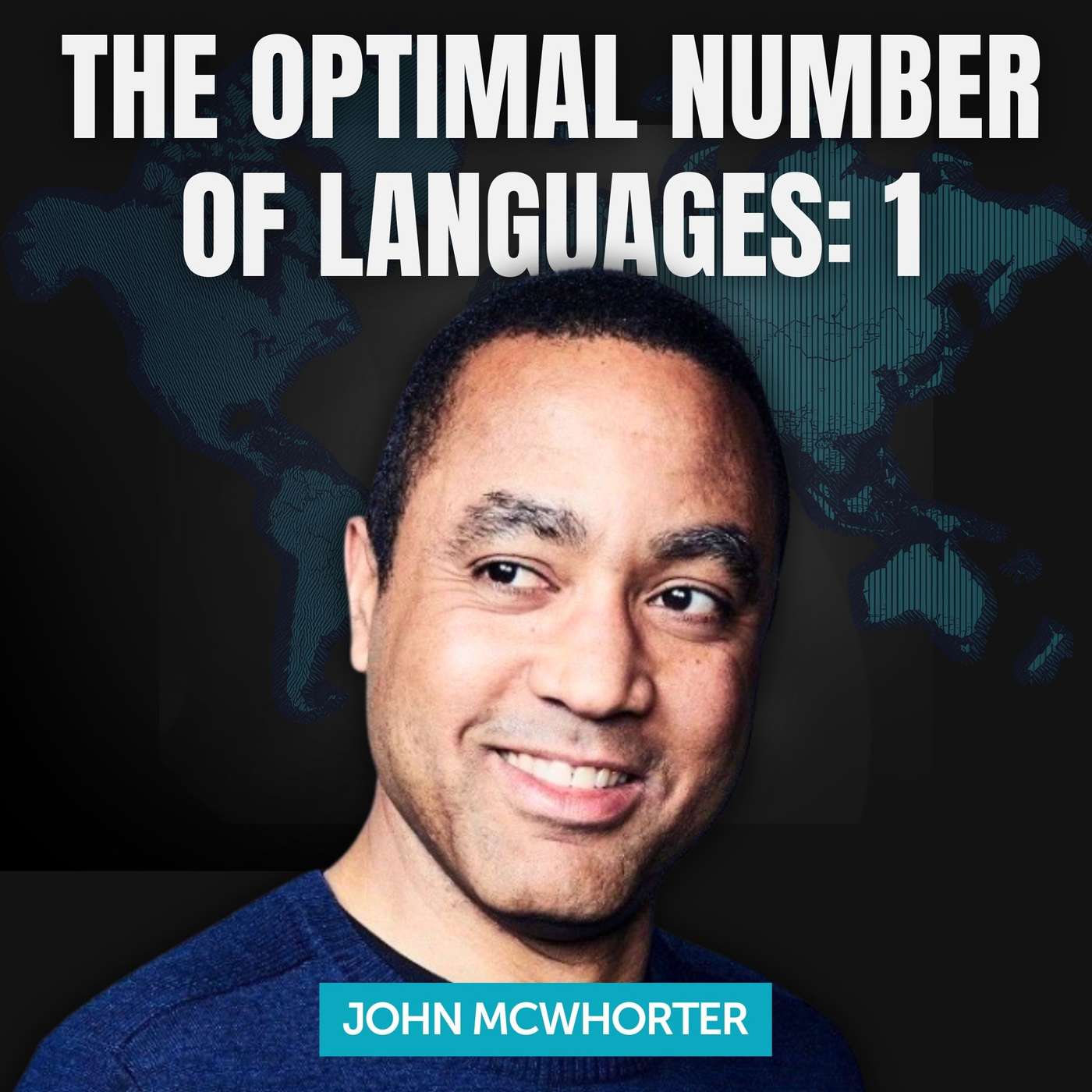
#142 Classic episode – John McWhorter on why the optimal number of languages might be one, and other provocative claims about language

#142 Classic episode – John McWhorter on why the optimal number of languages might be one, and other provocative claims about language

John McWhorter is a linguistics professor at Columbia University specialising in research on creole languages. He's also a content-producing machine, never afraid to give his frank opinion on anything and everything. On top of his academic work, he's written 22 books, produced five online university courses, hosts one and a half podcasts, and now writes a regular New York Times op-ed column. Rebroadcast: this episode was originally released in December 2022. YouTube video version: https://youtu.be/MEd7TT_nMJE Links to learn more, video, and full transcript: https://80k.link/JM We ask him what we think are the most important things everyone ought to know about linguistics, including: Can you communicate faster in some languages than others, or is there some constraint that prevents that? Does learning a second or third language make you smarter or not? Can a language decay and get worse at communicating what people want to say? If children aren't taught a language, how many generations does it take them to invent a fully fledged one of their own? Did Shakespeare write in a foreign language, and if so, should we translate his plays? How much does language really shape the way we think? Are creoles the best languages in the world — languages that ideally we would all speak? What would be the optimal number of languages globally? Does trying to save dying languages do their speakers a favour, or is it more of an imposition? Should we bother to teach foreign languages in UK and US schools? Is it possible to save the important cultural aspects embedded in a dying language without saving the language itself? Will AI models speak a language of their own in the future, one that humans can't understand but which better serves the tradeoffs AI models need to make? We’ve also added John’s talk “Why the World Looks the Same in Any Language” to the end of this episode. So stick around after the credits! Chapters: Rob's intro (00:00:00) Who's John McWhorter? (00:05:02) Does learning another language make you smarter? (00:05:54) Updating Shakespeare (00:07:52) Should we bother teaching foreign languages in school? (00:12:09) Language loss (00:16:05) The optimal number of languages for humanity (00:27:57) Do we reason about the world using language and words? (00:31:22) Can we communicate meaningful information more quickly in some languages? (00:35:04) Creole languages (00:38:48) AI and the future of language (00:50:45) Should we keep ums and ahs in The 80,000 Hours Podcast? (00:59:10) Why the World Looks the Same in Any Language (01:02:07) Producer: Keiran Harris Audio mastering: Ben Cordell and Simon Monsour Video editing: Ryan Kessler and Simon Monsour Transcriptions: Katy Moore
1h 35min•Jan 6, 2026
2025 Highlight-o-thon: Oops! All Bests

2025 Highlight-o-thon: Oops! All Bests

It’s that magical time of year once again — highlightapalooza! Stick around for one top bit from each episode we recorded this year, including: Kyle Fish explaining how Anthropic’s AI Claude descends into spiritual woo when left to talk to itself Ian Dunt on why the unelected House of Lords is by far the best part of the British government Sam Bowman’s strategy to get NIMBYs to love it when things get built next to their houses Buck Shlegeris on how to get an AI model that wants to seize control to accidentally help you foil its plans …as well as 18 other top observations and arguments from the past year of the show. Links to learn more, video, and full transcript: https://80k.info/best25 It's been another year of living through history, whether we asked for it or not. Luisa and Rob will be back in 2026 to help you make sense of whatever comes next — as Earth continues its indifferent journey through the cosmos, now accompanied by AI systems that can summarise our meetings and generate adequate birthday messages for colleagues we barely know.
1h 40min•Dec 29, 2025
#232 – Andreas Mogensen on what we owe 'philosophical Vulcans' and unconscious beings

#232 – Andreas Mogensen on what we owe 'philosophical Vulcans' and unconscious beings

Most debates about the moral status of AI systems circle the same question: is there something that it feels like to be them? But what if that’s the wrong question to ask? Andreas Mogensen — a senior researcher in moral philosophy at the University of Oxford — argues that so-called 'phenomenal consciousness' might be neither necessary nor sufficient for a being to deserve moral consideration. Links to learn more and full transcript: https://80k.info/am25 For instance, a creature on the sea floor that experiences nothing but faint brightness from the sun might have no moral claim on us, despite being conscious. Meanwhile, any being with real desires that can be fulfilled or not fulfilled can arguably be benefited or harmed. Such beings arguably have a capacity for welfare, which means they might matter morally. And, Andreas argues, desire may not require subjective experience. Desire may need to be backed by positive or negative emotions — but as Andreas explains, there are some reasons to think a being could also have emotions without being conscious. There’s another underexplored route to moral patienthood: autonomy. If a being can rationally reflect on its goals and direct its own existence, we might have a moral duty to avoid interfering with its choices — even if it has no capacity for welfare. However, Andreas suspects genuine autonomy might require consciousness after all. To be a rational agent, your beliefs probably need to be justified by something, and conscious experience might be what does the justifying. But even this isn’t clear. The upshot? There’s a chance we could just be really mistaken about what it would take for an AI to matter morally. And with AI systems potentially proliferating at massive scale, getting this wrong could be among the largest moral errors in history. In today’s interview, Andreas and host Zershaaneh Qureshi confront all these confusing ideas, challenging their intuitions about consciousness, welfare, and morality along the way. They also grapple with a few seemingly attractive arguments which share a very unsettling conclusion: that human extinction (or even the extinction of all sentient life ) could actually be a morally desirable thing. This episode was recorded on December 3, 2025. Chapters: Cold open (00:00:00) Introducing Zershaaneh (00:00:55) The puzzle of moral patienthood (00:03:20) Is subjective experience necessary? (00:05:52) What is it to desire? (00:10:42) Desiring without experiencing (00:17:56) What would make AIs moral patients? (00:28:17) Another route entirely: deserving autonomy (00:45:12) Maybe there's no objective truth about any of this (01:12:06) Practical implications (01:29:21) Why not just let superintelligence figure this out for us? (01:38:07) How could human extinction be a good thing? (01:47:30) Lexical threshold negative utilitarianism (02:12:30) So... should we still try to prevent extinction? (02:25:22) What are the most important questions for people to address here? (02:32:16) Is God GDPR compliant? (02:35:32) Video and audio editing: Dominic Armstrong, Milo McGuire, Luke Monsour, and Simon Monsour Coordination, transcripts, and web: Katy Moore
2h 37min•Dec 19, 2025
#231 – Paul Scharre on how AI-controlled robots will and won't change war

#231 – Paul Scharre on how AI-controlled robots will and won't change war

In 1983, Stanislav Petrov, a Soviet lieutenant colonel, sat in a bunker watching a red screen flash “MISSILE LAUNCH.” Protocol demanded he report it to superiors, which would very likely trigger a retaliatory nuclear strike. Petrov didn’t. He reasoned that if the US were actually attacking, they wouldn’t fire just 5 missiles — they’d empty the silos. He bet the fate of the world on a hunch that his machine was broken. He was right. Paul Scharre, the former Army Ranger who led the Pentagon team that wrote the US military’s first policy on autonomous weapons, has a question: What would an AI have done in Petrov’s shoes? Would an AI system have been flexible and wise enough to make the same judgement? Or would it immediately launch a counterattack? Paul joins host Luisa Rodriguez to explain why we are hurtling toward a “battlefield singularity” — a tipping point where AI increasingly replaces humans in much of the military, changing the way war is fought with speed and complexity that outpaces humans’ ability to keep up. Links to learn more, video, and full transcript: https://80k.info/ps Militaries don’t necessarily want to take humans out of the loop. But Paul argues that the competitive pressure of warfare creates a “use it or lose it” dynamic. As former Deputy Secretary of Defense Bob Work put it: “If our competitors go to Terminators, and their decisions are bad, but they’re faster, how would we respond?” Once that line is crossed, Paul warns we might enter an era of “flash wars” — conflicts that spiral out of control as quickly and inexplicably as a flash crash in the stock market, with no way for humans to call a timeout. In this episode, Paul and Luisa dissect what this future looks like: Swarming warfare: Why the future isn’t just better drones, but thousands of cheap, autonomous agents coordinating like a hive mind to overwhelm defences. The Gatling gun cautionary tale: The inventor of the Gatling gun thought automating fire would reduce the number of soldiers needed, saving lives. Instead, it made war significantly deadlier. Paul argues AI automation could do the same, increasing lethality rather than creating “bloodless” robot wars. The cyber frontier: While robots have physical limits, Paul argues cyberwarfare is already at the point where AI can act faster than human defenders, leading to intelligent malware that evolves and adapts like a biological virus. The US-China “adoption race”: Paul rejects the idea that the US and China are in a spending arms race (AI is barely 1% of the DoD budget). Instead, it’s a race of organisational adoption — one where the US has massive advantages in talent and chips, but struggles with bureaucratic inertia that might not be a problem for an autocratic country. Paul also shares a personal story from his time as a sniper in Afghanistan — watching a potential target through his scope — that fundamentally shaped his view on why human judgement, with all its flaws, is the only thing keeping war from losing its humanity entirely. This episode was recorded on October 23-24, 2025. Chapters: Cold open (00:00:00) Who’s Paul Scharre? (00:00:46) How will AI and automation transform the nature of war? (00:01:17) Why would militaries take humans out of the loop? (00:12:22) AI in nuclear command, control, and communications (00:18:50) Nuclear stability and deterrence (00:36:10) What to expect over the next few decades (00:46:21) Financial and human costs of future “hyperwar” scenarios (00:50:42) AI warfare and the balance of power (01:06:37) Barriers to getting to automated war (01:11:08) Failure modes of autonomous weapons systems (01:16:28) Could autonomous weapons systems actually make us safer? (01:29:36) Is Paul overall optimistic or pessimistic about increasing automation in the military?
2h 45min•Dec 17, 2025
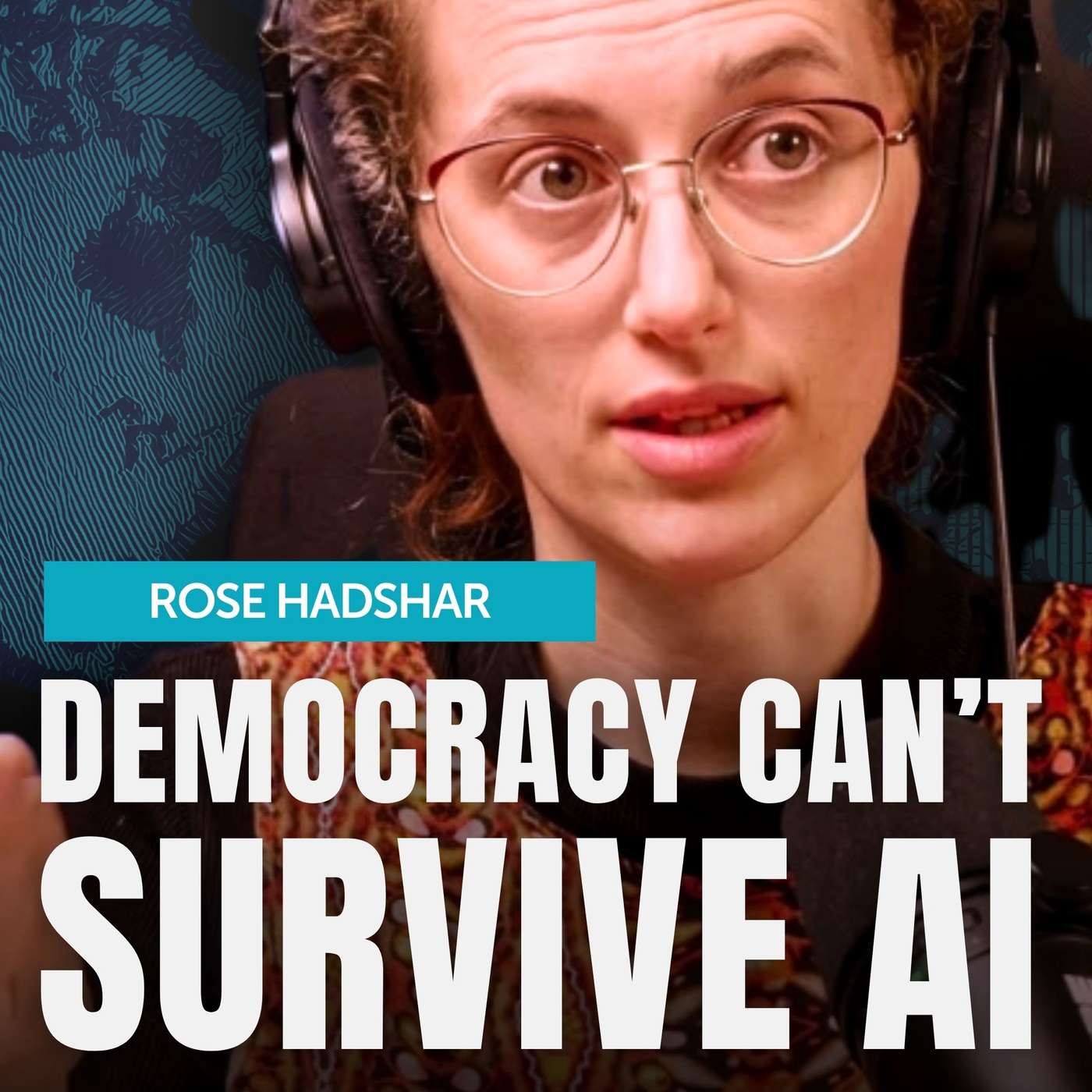
AI might let a few people control everything — permanently (article by Rose Hadshar)

AI might let a few people control everything — permanently (article by Rose Hadshar)

Power is already concentrated today: over 800 million people live on less than $3 a day, the three richest men in the world are worth over $1 trillion, and almost six billion people live in countries without free and fair elections. This is a problem in its own right. There is still substantial distribution of power though: global income inequality is falling, over two billion people live in electoral democracies, no country earns more than a quarter of GDP, and no company earns as much as 1%. But in the future, advanced AI could enable much more extreme power concentration than we’ve seen so far. Many believe that within the next decade the leading AI projects will be able to run millions of superintelligent AI systems thinking many times faster than humans. These systems could displace human workers, leading to much less economic and political power for the vast majority of people; and unless we take action to prevent it, they may end up being controlled by a tiny number of people, with no effective oversight. Once these systems are deployed across the economy, government, and the military, whatever goals they’re built to have will become the primary force shaping the future. If those goals are chosen by the few, then a small number of people could end up with the power to make all of the important decisions about the future. This article by Rose Hadshar explores this emerging challenge in detail. You can see all the images and footnotes in the original article on the 80,000 Hours website. Chapters: Introduction (00:00) Summary (02:15) Section 1: Why might AI-enabled power concentration be a pressing problem? (07:02) Section 2: What are the top arguments against working on this problem? (45:02) Section 3: What can you do to help?
1h 0min•Dec 12, 2025
#230 – Dean Ball on how AI is a huge deal — but we shouldn’t regulate it yet

#230 – Dean Ball on how AI is a huge deal — but we shouldn’t regulate it yet

Former White House staffer Dean Ball thinks it's very likely some form of 'superintelligence' arrives in under 20 years. He thinks AI being used for bioweapon research is "a real threat model, obviously." He worries about dangerous "power imbalances" should AI companies reach "$50 trillion market caps." And he believes the agriculture revolution probably worsened human health and wellbeing. Given that, you might expect him to be pushing for AI regulation. Instead, he’s become one of the field’s most prominent and thoughtful regulation sceptics and was recently the lead writer on Trump’s AI Action Plan, before moving to the Foundation for American Innovation. Links to learn more, video, and full transcript: https://80k.info/db Dean argues that the wrong regulations, deployed too early, could freeze society into a brittle, suboptimal political and economic order. As he puts it, “my big concern is that we’ll lock ourselves in to some suboptimal dynamic and actually, in a Shakespearean fashion, bring about the world that we do not want.” Dean’s fundamental worry is uncertainty: “We just don’t know enough yet about the shape of this technology, the ergonomics of it, the economics of it… You can’t govern the technology until you have a better sense of that.” Premature regulation could lock us in to addressing the wrong problem (focusing on rogue AI when the real issue is power concentration), using the wrong tools (using compute thresholds when we should regulate companies instead), through the wrong institutions (captured AI-specific bodies), all while making it harder to build the actual solutions we’ll need (like open source alternatives or new forms of governance). But Dean is also a pragmatist: he opposed California’s AI regulatory bill SB 1047 in 2024, but — impressed by new capabilities enabled by “reasoning models” — he supported its successor SB 53 in 2025. And as Dean sees it, many of the interventions that would help with catastrophic risks also happen to improve mundane AI safety, make products more reliable, and address present-day harms like AI-assisted suicide among teenagers. So rather than betting on a particular vision of the future, we should cross the river by feeling the stones and pursue “robust” interventions we’re unlikely to regret. This episode was recorded on September 24, 2025. Chapters: Cold open (00:00:00) Who’s Dean Ball? (00:01:22) How likely are we to get superintelligence soon, and how bad could it be? (00:01:54) The military may not adopt AI that fast (00:10:54) Dean’s “two wolves” of AI scepticism and optimism (00:17:48) Will AI self-improvement be a game changer? (00:28:20) The case for regulating at the last possible moment (00:33:05) AI could destroy our fragile democratic equilibria. Why not freak out? (00:52:30) The case AI will soon be way overregulated (01:02:51) How to handle the threats without collateral damage (01:14:56) Easy wins against AI misuse (01:26:54) Maybe open source can be handled gracefully (01:41:13) Would a company be sued for trillions if their AI caused a pandemic? (01:47:58) Dean dislikes compute thresholds. Here's what he'd do instead. (01:57:16) Could AI advances lead to violent conflict between the US and China? (02:02:52) Will we see a MAGA-Yudkowskyite alliance? Doomers and the Right (02:12:29) The tactical case for focusing on present-day harms (02:26:51) Is there any way to get the US government to use AI sensibly?
2h 54min•Dec 10, 2025
#229 – Marius Hobbhahn on the race to solve AI scheming before models go superhuman

#229 – Marius Hobbhahn on the race to solve AI scheming before models go superhuman

We often worry about AI models “hallucinating” or making honest mistakes. But what happens when a model knows the truth, but decides to deceive you anyway to achieve a goal of its own? This isn’t sci-fi — it’s happening regularly in deployment today. Marius Hobbhahn, CEO of the world’s top research organisation focused on AI deception ( Apollo Research ), has been collaborating with OpenAI to figure out what causes OpenAI’s reasoning models to 'scheme' against users. Links to learn more, video, and full transcript: https://80k.info/mh25 In a striking case uncovered by Apollo, when many AI models were told they would have capabilities removed if they performed too well on a test, they successfully “sandbagged” — intentionally answering questions incorrectly to appear less capable than they were, while also being careful not to perform so poorly it would arouse suspicion. These models had somehow developed a preference to preserve their own capabilities, despite never being trained in that goal or assigned a task that called for it. This doesn’t cause significant risk now, but as AI models become more general, superhuman in more areas, and are given more decision-making power, it could become outright dangerous. In today’s episode, Marius details his recent collaboration with OpenAI to train o3 to follow principles like “never lie,” even when placed in “high-pressure” situations where it would otherwise make sense. The good news: They reduced “covert rule violations” (scheming) by about 97%. The bad news: In the remaining 3% of cases, the models sometimes became more sophisticated — making up new principles to justify their lying, or realising they were in a test environment and deciding to play along until the coast was clear. Marius argues that while we can patch specific behaviours, we might be entering a “cat-and-mouse game” where models are becoming more situationally aware — that is, aware of when they’re being evaluated — faster than we are getting better at testing. Even if models can’t tell they’re being tested, they can produce hundreds of pages of reasoning before giving answers and include strange internal dialects humans can’t make sense of, making it much harder to tell whether models are scheming or train them to stop. Marius and host Rob Wiblin discuss: Why models pretending to be dumb is a rational survival strategy The Replit AI agent that deleted a production database and then lied about it Why rewarding AIs for achieving outcomes might lead to them becoming better liars The weird new language models are using in their internal chain-of-thought This episode was recorded on September 19, 2025. Chapters: Cold open (00:00:00) Who’s Marius Hobbhahn? (00:01:20) Top three examples of scheming and deception (00:02:11) Scheming is a natural path for AI models (and people) (00:15:56) How enthusiastic to lie are the models? (00:28:18) Does eliminating deception fix our fears about rogue AI? (00:35:04) Apollo’s collaboration with OpenAI to stop o3 lying (00:38:24) They reduced lying a lot, but the problem is mostly unsolved (00:52:07) Detecting situational awareness with thought injections (01:02:18) Chains of thought becoming less human understandable (01:16:09) Why can’t we use LLMs to make realistic test environments? (01:28:06) Is the window to address scheming closing? (01:33:58) Would anything still work with superintelligent systems?
3h 3min•Dec 3, 2025
Rob & Luisa chat kids, the 2016 fertility crash, and how the 50s invented parenting that makes us miserable

Rob & Luisa chat kids, the 2016 fertility crash, and how the 50s invented parenting that makes us miserable

Global fertility rates aren’t just falling: the rate of decline is accelerating. From 2006 to 2016, fertility dropped gradually, but since 2016 the rate of decline has increased 4.5-fold. In many wealthy countries, fertility is now below 1.5. While we don’t notice it yet, in time that will mean the population halves every 60 years. Rob Wiblin is already a parent and Luisa Rodriguez is about to be, which prompted the two hosts of the show to get together to chat about all things parenting — including why it is that far fewer people want to join them raising kids than did in the past. Links to learn more, video, and full transcript: https://80k.info/lrrw While “kids are too expensive” is the most common explanation, Rob argues that money can’t be the main driver of the change: richer people don’t have many more children now, and we see fertility rates crashing even in countries where people are getting much richer. Instead, Rob points to a massive rise in the opportunity cost of time, increasing expectations parents have of themselves, and a global collapse in socialising and coupling up. In the EU, the rate of people aged 25–35 in relationships has dropped by 20% since 1990, which he thinks will “mechanically reduce the number of children.” The overall picture is a big shift in priorities: in the US in 1993, 61% of young people said parenting was an important part of a flourishing life for them, vs just 26% today. That leads Rob and Luisa to discuss what they might do to make the burden of parenting more manageable and attractive to people, including themselves. In this non-typical episode, we take a break from the usual heavy topics to discuss the personal side of bringing new humans into the world, including: Rob’s updated list of suggested purchases for new parents How parents could try to feel comfortable doing less How beliefs about childhood play have changed so radically What matters and doesn’t in childhood safety Why the decline in fertility might be impractical to reverse Whether we should care about a population crash in a world of AI automation This episode was recorded on September 12, 2025. Chapters: Cold open (00:00:00) We're hiring (00:01:26) Why did Luisa decide to have kids? (00:02:10) Ups and downs of pregnancy (00:04:15) Rob’s experience for the first couple years of parenthood (00:09:39) Fertility rates are massively declining (00:21:25) Why do fewer people want children? (00:29:20) Is parenting way harder now than it used to be?
1h 59min•Nov 25, 2025
#228 – Eileen Yam on how we're completely out of touch with what the public thinks about AI

#228 – Eileen Yam on how we're completely out of touch with what the public thinks about AI

If you work in AI, you probably think it’s going to boost productivity, create wealth, advance science, and improve your life. If you’re a member of the American public, you probably strongly disagree. In three major reports released over the last year, the Pew Research Center surveyed over 5,000 US adults and 1,000 AI experts. They found that the general public holds many beliefs about AI that are virtually nonexistent in Silicon Valley, and that the tech industry’s pitch about the likely benefits of their work has thus far failed to convince many people at all. AI is, in fact, a rare topic that mostly unites Americans — regardless of politics, race, age, or gender. Links to learn more, video, and full transcript: https://80k.info/ey Today’s guest, Eileen Yam, director of science and society research at Pew, walks us through some of the eye-watering gaps in perception: Jobs: 73% of AI experts see a positive impact on how people do their jobs. Only 23% of the public agrees. Productivity: 74% of experts say AI is very likely to make humans more productive. Just 17% of the public agrees. Personal benefit: 76% of experts expect AI to benefit them personally. Only 24% of the public expects the same (while 43% expect it to harm them). Happiness: 22% of experts think AI is very likely to make humans happier, which is already surprisingly low — but a mere 6% of the public expects the same. For the experts building these systems, the vision is one of human empowerment and efficiency. But outside the Silicon Valley bubble, the mood is more one of anxiety — not only about Terminator scenarios, but about AI denying their children “curiosity, problem-solving skills, critical thinking skills and creativity,” while they themselves are replaced and devalued: 53% of Americans say AI will worsen people’s ability to think creatively. 50% believe it will hurt our ability to form meaningful relationships. 38% think it will worsen our ability to solve problems. Open-ended responses to the surveys reveal a poignant fear: that by offloading cognitive work to algorithms we are changing childhood to a point we no longer know what adults will result. As one teacher quoted in the study noted, we risk raising a generation that relies on AI so much it never “grows its own curiosity, problem-solving skills, critical thinking skills and creativity.” If the people building the future are this out of sync with the people living in it, the impending “techlash” might be more severe than industry anticipates. In this episode, Eileen and host Rob Wiblin break down the data on where these groups disagree, where they actually align (nobody trusts the government or companies to regulate this), and why the “digital natives” might actually be the most worried of all. This episode was recorded on September 25, 2025. Chapters: Cold open (00:00:00) Who’s Eileen Yam? (00:01:30) Is it premature to care what the public says about AI? (00:02:26) The top few feelings the US public has about AI (00:06:34) The public and AI insiders disagree enormously on some things (00:16:25) Fear #1: Erosion of human abilities and connections (00:20:03) Fear #2: Loss of control of AI (00:28:50) Americans don't want AI in their personal lives (00:33:13) AI at work and job loss (00:40:56) Does the public always feel this way about new things? (00:44:52) The public doesn't think AI is overhyped (00:51:49) The AI industry seems on a collision course with the public (00:58:16) Is the survey methodology good?
1h 43min•Nov 20, 2025
OpenAI: The nonprofit refuses to be killed (with Tyler Whitmer)

OpenAI: The nonprofit refuses to be killed (with Tyler Whitmer)

Last December, the OpenAI business put forward a plan to completely sideline its nonprofit board. But two state attorneys general have now blocked that effort and kept that board very much alive and kicking. The for-profit’s trouble was that the entire operation was founded on the premise of — and legally pledged to — the purpose of ensuring that “ artificial general intelligence benefits all of humanity.” So to get its restructure past regulators, the business entity has had to agree to 20 serious requirements designed to ensure it continues to serve that goal. Attorney Tyler Whitmer, as part of his work with Legal Advocates for Safe Science and Technology, has been a vocal critic of OpenAI’s original restructure plan. In today’s conversation, he lays out all the changes and whether they will ultimately matter. Full transcript, video, and links to learn more: https://80k.info/tw2 After months of public pressure and scrutiny from the attorneys general (AGs) of California and Delaware, the December proposal itself was sidelined — and what replaced it is far more complex and goes a fair way towards protecting the original mission: The nonprofit’s charitable purpose — “ensure that artificial general intelligence benefits all of humanity” — now legally controls all safety and security decisions at the company. The four people appointed to the new Safety and Security Committee can block model releases worth tens of billions. The AGs retain ongoing oversight, meeting quarterly with staff and requiring advance notice of any changes that might undermine their authority. OpenAI’s original charter, including the remarkable “stop and assist” commitment, remains binding. But significant concessions were made. The nonprofit lost exclusive control of AGI once developed — Microsoft can commercialise it through 2032. And transforming from complete control to this hybrid model represents, as Tyler puts it, “a bad deal compared to what OpenAI should have been.” The real question now: will the Safety and Security Committee use its powers? It currently has four part-time volunteer members and no permanent staff, yet they’re expected to oversee a company racing to build AGI while managing commercial pressures in the hundreds of billions. Tyler calls on OpenAI to prove they’re serious about following the agreement: Hire management for the SSC. Add more independent directors with AI safety expertise. Maximise transparency about mission compliance. "There’s a real opportunity for this to go well. A lot … depends on the boards, so I really hope that they … step into this role … and do a great job. … I will hope for the best and prepare for the worst, and stay vigilant throughout." Chapters: We’re hiring (00:00:00) Cold open (00:00:40) Tyler Whitmer is back to explain the latest OpenAI developments (00:01:46) The original radical plan (00:02:39) What the AGs forced on the for-profit (00:05:47) Scrappy resistance probably worked (00:37:24) The Safety and Security Committee has teeth — will it use them? (00:41:48) Overall, is this a good deal or a bad deal? (00:52:06) The nonprofit and PBC boards are almost the same. Is that good or bad or what? (01:13:29) Board members’ “independence” (01:19:40) Could the deal still be challenged? (01:25:32) Will the deal satisfy OpenAI investors? (01:31:41) The SSC and philanthropy need serious staff (01:33:13) Outside advocacy on this issue, and the impact of LASST (01:38:09) What to track to tell if it's working out (01:44:28) This episode was recorded on November 4, 2025.
1h 56min•Nov 11, 2025
#227 – Helen Toner on the geopolitics of AGI in China and the Middle East

#227 – Helen Toner on the geopolitics of AGI in China and the Middle East

With the US racing to develop AGI and superintelligence ahead of China, you might expect the two countries to be negotiating how they’ll deploy AI, including in the military, without coming to blows. But according to Helen Toner, director of the Center for Security and Emerging Technology in DC, “the US and Chinese governments are barely talking at all.” Links to learn more, video, and full transcript: https://80k.info/ht25 In her role as a founder, and now leader, of DC’s top think tank focused on the geopolitical and military implications of AI, Helen has been closely tracking the US’s AI diplomacy since 2019. “Over the last couple of years there have been some direct [US–China] talks on some small number of issues, but they’ve also often been completely suspended.” China knows the US wants to talk more, so “that becomes a bargaining chip for China to say, ‘We don’t want to talk to you. We’re not going to do these military-to-military talks about extremely sensitive, important issues, because we’re mad.'” Helen isn’t sure the groundwork exists for productive dialogue in any case. “At the government level, [there’s] very little agreement” on what AGI is, whether it’s possible soon, whether it poses major risks. Without shared understanding of the problem, negotiating solutions is very difficult. Another issue is that so far the Chinese Communist Party doesn’t seem especially “AGI-pilled.” While a few Chinese companies like DeepSeek are betting on scaling, she sees little evidence Chinese leadership shares Silicon Valley’s conviction that AGI will arrive any minute now, and export controls have made it very difficult for them to access compute to match US competitors. When DeepSeek released R1 just three months after OpenAI’s o1, observers declared the US–China gap on AI had all but disappeared. But Helen notes OpenAI has since scaled to o3 and o4, with nothing to match on the Chinese side. “We’re now at something like a nine-month gap, and that might be longer.” To find a properly AGI-pilled autocracy, we might need to look at nominal US allies. The US has approved massive data centres in the UAE and Saudi Arabia with “hundreds of thousands of next-generation Nvidia chips” — delivering colossal levels of computing power. When OpenAI announced this deal with the UAE, they celebrated that it was “ rooted in democratic values,” and would advance “ democratic AI rails ” and provide “a clear alternative to authoritarian versions of AI.” But the UAE scores 18 out of 100 on Freedom House’s democracy index. “This is really not a country that respects rule of law,” Helen observes. Political parties are banned, elections are fake, dissidents are persecuted. If AI access really determines future national power, handing world-class supercomputers to Gulf autocracies seems pretty questionable. The justification is typically that “if we don’t sell it, China will” — a transparently false claim, given severe Chinese production constraints. It also raises eyebrows that Gulf countries conduct joint military exercises with China and their rulers have “very tight personal and commercial relationships with Chinese political leaders and business leaders.” In today’s episode, host Rob Wiblin and Helen discuss all that and more. This episode was recorded on September 25, 2025. CSET is hiring a frontier AI research fellow! https://80k.info/cset-role Check out its careers page for current roles: https://cset.georgetown.edu/careers/ Chapters: Cold open (00:00:00) Who’s Helen Toner? (00:01:02) Helen’s role on the OpenAI board, and what happened with Sam Altman (00:01:31) The Center for Security and Emerging Technology (CSET) (00:07:35) CSET’s role in export controls against China (00:10:43) Does it matter if the world uses US AI models? (00:21:24) Is China actually racing to build AGI? (00:27:10) Could China easily steal AI model weights from US companies? (00:38:14) The next big thing is probably robotics (00:46:42) Why is the Trump administration sabotaging the US high-tech sector? (00:48:17) Are data centres in the UAE “good for democracy”? (00:51:31) Will AI inevitably concentrate power? (01:06:20) “Adaptation buffers” vs non-proliferation (01:28:16) Will the military use AI for decision-making? (01:36:09) “Alignment” is (usually) a terrible term (01:42:51) Is Congress starting to take superintelligence seriously? (01:45:19) AI progress isn't actually slowing down (01:47:44) What's legit vs not about OpenAI’s restructure (01:55:28) Is Helen unusually “normal”? (01:58:57) How to keep up with rapid changes in AI and geopolitics (02:02:42) What CSET can uniquely add to the DC policy world (02:05:51) Talent bottlenecks in DC (02:13:26) What evidence, if any, could settle how worried we should be about AI risk? (02:16:28) Is CSET hiring?
2h 20min•Nov 5, 2025
1 / 17