Menu

  • Home
  • About
  • Search
  • Featured Shows
Spokely

© 2026 Spokely

Planet Money

Planet Money

NPR

BusinessNews

Wanna see a trick? Give us any topic and we can tie it back to the economy. At Planet Money, we explore the forces that shape our lives and bring you along for the ride. Don't just understand the economy – understand the world. Wanna go deeper? Subscribe to Planet Money+ and get sponsor-free episodes of Planet Money, The Indicator, and Planet Money Summer School. Plus access to bonus content. It's a new way to support the show you love. Learn more at plus.npr.org/planetmoney

Episodes

Chef vs. Robot

Chef vs. Robot

Robby the chef has lots of endearing qualities. He can make over 5000 dishes, he’s a consistent cook, and he’s never late for work. But he’s not a human. It is a 750 lb. stainless steel robot. With a rotating wok at its center. It’s a wok-bot. Automation has changed many industries. But automation only started entering restaurant kitchens in the past couple decades. Which raises the question – what will robots mean for the restaurant industry? How will automation change jobs and how will it change the very food we eat? Today on the show, we talk with a Nobel prize-winning economist, Daron Acemoglu, about when automation is complementing or displacing workers. And we decide to put this wok-bot to the test. We pit a human chef against Robby the wok-bot in a head-to-metalhead smackdown. Further Listening/Reading: How AI could help rebuild the middle class The Big Red Button Check out our AI series: Planet Money makes an episode using AI Why Nations Fail, America Edition (newsletter) A New Way To Understand Automation (newsletter) Get your book tour tickets here. / Pre-order the Planet Money book and get a free gift. Subscribe to Planet Money+ Listen free: Apple Podcasts, Spotify, the NPR app or anywhere you get podcasts. Facebook / Instagram / TikTok / Our weekly Newsletter. This episode was hosted by Erika Beras and Justin Kramon. It was produced by Sam Yellowhorse Kesler. It was edited by Jess Jiang. It was fact-checked by Sierra Juarez and engineered by Robert Rodriguez with help from Cena Loffredo. Interpretation help from Huo Jingnan. Alex Goldmark is Planet Money ’s executive producer. To manage podcast ad preferences, review the links below: See pcm.adswizz.com for information about our collection and use of personal data for sponsorship and to manage your podcast sponsorship preferences. Learn more about sponsor message choices: podcastchoices.com/adchoices NPR Privacy Policy
25min•Mar 13, 2026
The laws of the office revisited

The laws of the office revisited

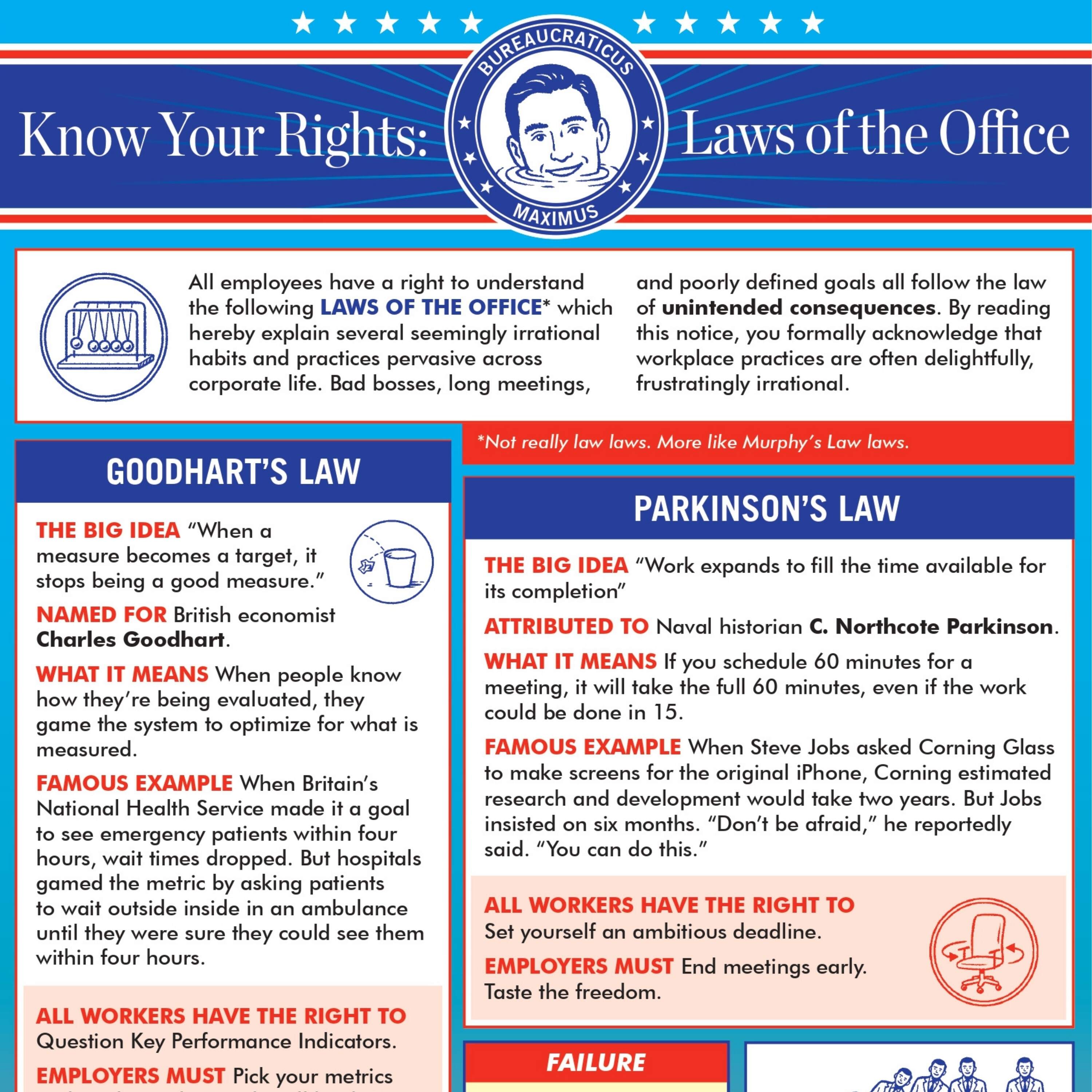
Live event info and tickets here. If something is going wrong in your workplace, there's probably a law that explains why. Meetings always seem long, and never end early? There’s Parkinson’s Law, which says work expands to the time allotted, or, restated: meetings will always take up all the time blocked on Outlook calendars. Is your boss bad at managing? Check the Peter Principle, which says people are promoted to their level of incompetence. A good worker does not a good manager make. And yet … here we are. Once you hear these laws, and a few others, you start to spot them everywhere. Today on the show, we picked a few of the most famous and powerful ‘laws of the office’ and tested them out on each other. Pre-order the Planet Money book and get a free gift. / Subscribe to Planet Money+ Listen free: Apple Podcasts, Spotify, the NPR app or anywhere you get podcasts. Facebook / Instagram / TikTok / Our weekly Newsletter. This episode was hosted by Kenny Malone, Sarah Gonzalez, and Alexi Horowitz-Ghazi. It was produced by Alexi Horowitz-Ghazi. Bryant Urstadt edited this show. Planet Money ’s executive producer is Alex Goldmark. To manage podcast ad preferences, review the links below: See pcm.adswizz.com for information about our collection and use of personal data for sponsorship and to manage your podcast sponsorship preferences. Learn more about sponsor message choices: podcastchoices.com/adchoices NPR Privacy Policy
29min•Mar 11, 2026
Planet Money vs. the NBA’s tanking problem

Planet Money vs. the NBA’s tanking problem

What do we want from sports? The very best athletes competing as hard as they know how, putting all their effort and training and natural ability to the test against their opponents. But this time of year, that’s not the product the NBA is putting on the court. Instead, teams at the bottom of the league are competing … to lose, because it could help them get a top pick in next year’s draft. It’s called tanking — it’s bad for fans, and it’s bad for the league. Tanking has gotten especially egregious this year. Even NBA Adam Silver has called out teams for tanking. He recently announced that league bigwigs are considering “every possible remedy” to “align incentives.” Today on the show — Planet Money fixes the NBA’s tanking problem by … fixing the NBA draft. We get solutions from Hockey Hall of Famer Jayna Hefford, World Cup Champion Sam Mewis, and long-time NBA analyst Zach Lowe. Handles for the NBA fans in the episode: thevoiceofevan, fullcourtblitz, ashleynevel, igotnxtpodcast, finesse.wes, basketballsavant, and mikedaddino__. Live event info and tickets here / Pre-order the Planet Money book and get a free gift. / Subscribe to Planet Money+ Listen free: Apple Podcasts, Spotify, or the NPR app Facebook / Instagram / TikTok / Our weekly Newsletter This episode was hosted by Keith Romer and Erika Beras. It was produced by James Sneed with an assist from Sam Yellowhorse Kesler. It was edited by Jess Jiang and fact-checked by Sierra Juarez. Alex Goldmark is our executive producer. To manage podcast ad preferences, review the links below: See pcm.adswizz.com for information about our collection and use of personal data for sponsorship and to manage your podcast sponsorship preferences. Learn more about sponsor message choices: podcastchoices.com/adchoices NPR Privacy Policy
30min•Mar 6, 2026
The Business of Heated Rivalry

The Business of Heated Rivalry

Heated Rivalry, the steamy hockey romance show, was made for about $2 million per episode. That is remarkably cheap for an hour-long drama. Today on the show, a conversation with Heated Rivalry creators Jacob Tierney and Brendan Brady about their television miracle on ice. It’s not just that the show was made efficiently and cleverly. Heated Rivalry comes from a Canadian economic system of making TV and movies that is completely different from how we do things in the US. In this episode of Planet Money, in partnership with the Pivot podcast co-hosted by Kara Swisher, we hear about a Canadian production model for making TV and movies and how it’s different from the U.S. model. And we learn what the experience of making Heated Rivalry teaches us about the current state of both industries. Live event info and tickets here. Pre-order the Planet Money book and get a free gift. / Subscribe to Planet Money+ Listen free: Apple Podcasts, Spotify, the NPR app or anywhere you get podcasts. Facebook / Instagram / TikTok / Our weekly Newsletter. The original Pivot episode from New York Magazine and The Vox Media Podcast Network was hosted by Kara Swisher, produced by Lara Naman, Zoë Marcus and Taylor Griffin and engineered by Brandon McFarland. Nishat Kurwa is Vox Media's Executive Producer of podcasts. This episode of Planet Money was hosted by Kenny Malone, produced by James Sneed, edited by Jess Jiang and fact-checked by Lara Naman. Alex Goldmark is our executive producer. To manage podcast ad preferences, review the links below: See pcm.adswizz.com for information about our collection and use of personal data for sponsorship and to manage your podcast sponsorship preferences. Learn more about sponsor message choices: podcastchoices.com/adchoices NPR Privacy Policy
27min•Mar 4, 2026
Don't hate the replicator, hate the game

Don't hate the replicator, hate the game

The world of science has been stuck in an existential crisis over whether we actually know the things we thought we knew. Re-running an old study today doesn't always yield the same result. Same with re-enacting old experiments. Collectively, this is known as the “replication crisis.” Economist Abel Brodeur has come up with one way to help fix this crisis: he’s invented an internationally crowdsourced surveillance system, designed to keep social scientists honest. He calls it the “Replication Games.” Further Listening: Fabricated data in research about honesty. You can't make this stuff up. Or, can you? The Experiment Experiment How Much Should We Trust Economics? This episode was hosted by Mary Childs and Alexi Horowitz-Ghazi. It was produced by James Sneed and Emma Peaslee, with help from Willa Rubin. It was edited by Jess Jiang, fact-checked by Sam Yellowhorse Kesler, and engineered by Ko Takasugi-Czernowin. Alex Goldmark is Planet Money’s executive producer. Learn more about sponsor message choices: podcastchoices.com/adchoices NPR Privacy Policy
36min•Feb 27, 2026
The ICE hiring boom

The ICE hiring boom

ICE is scaling up, with rapid new hiring. So we ask, has training new officers changed? At what cost? Also, the Trump administration has plans to pour billions of dollars into warehouses for mass immigrant detention centers, which can totally change the economy of some areas. We hear from a rural town in Georgia that wants an ICE facility in its own backyard. These episodes were originally published on Planet Money’s sister daily podcast The Indicator. Pre-order the Planet Money book and get a free gift. They were fact-checked by Sierra Juarez. Kate Concannon is our show's editor. This episode of Planet Money was produced by Luis Gallo, with help from James Sneed. It was edited by Planet Money’s Executive Producer, Alex Goldmark. To manage podcast ad preferences, review the links below: See pcm.adswizz.com for information about our collection and use of personal data for sponsorship and to manage your podcast sponsorship preferences. Learn more about sponsor message choices: podcastchoices.com/adchoices NPR Privacy Policy
18min•Feb 25, 2026
The Supreme Court struck down a bunch of Trump's tariffs. Now what?

The Supreme Court struck down a bunch of Trump's tariffs. Now what?

Live event info and tickets here. The Supreme Court has spoken. Those big, sweeping tariffs that President Trump imposed early last year? They’re illegal. On today’s show: Why were those tariffs struck down? Will anyone get refunds? And …what about this new 10 percent tariff the President just announced today? Plus — a growing market for tariff refunds. Tariffs. Ever. - Tariffs: What are they good for? - What "Made in China" actually means - The 145% tariff already did its damage - Are Trump's tariffs legal? - Days of our Tariffs - Trump's backup options for tariffs - What would it mean to actually refund the tariffs? Pre-order the Planet Money book and get a free gift. / Subscribe to Planet Money+ Listen free: Apple Podcasts, Spotify, the NPR app or anywhere you get podcasts. Facebook / Instagram / TikTok / Our weekly Newsletter. This episode was hosted by Jeff Guo, Mary Childs, and Sarah Gonzalez. It was produced by Sam Yellowhorse Kesler and Willa Rubin. It was edited by Marianne McCune. It was fact-checked by Sierra Juarez. Alex Goldmark is Planet Money ’s executive producer. To manage podcast ad preferences, review the links below: See pcm.adswizz.com for information about our collection and use of personal data for sponsorship and to manage your podcast sponsorship preferences. Learn more about sponsor message choices: podcastchoices.com/adchoices NPR Privacy Policy
25min•Feb 21, 2026
How to get what Greenland has, with permission

How to get what Greenland has, with permission

Book tour and ticket info here. Greenland has said it is not for sale. Denmark has said it can’t even legally sell Greenland. And at a security conference in Munich over the weekend, U.S. lawmakers spent a lot of time trying to walk back some of President Trump’s recent threats to try to buy, or even take over, the territory. But whether Trump can or will or should try to control or purchase a territory that doesn’t want to be sold is not the interesting question. What is interesting is how we got to this moment. And, how we might gracefully get out of it. Greenland is valuable for its minerals and because of its physical location in the world. (It’s easy to keep an eye on other countries from Greenland). Our latest: How the U.S. dropped the ball on the rare earths race. And one way the U.S. gets strategic locations without threatening to buy or take over an entire territory. Further listening: - Is Greenland really an untapped land of riches? - Add to cart: Greenland Pre-order the Planet Money book and get a free gift. / Subscribe to Planet Money+ Listen free: Apple Podcasts, Spotify, the NPR app or anywhere you get podcasts. Facebook / Instagram / TikTok / Our weekly Newsletter. This episode was produced by Willa Rubin with help from Sam Yellowhorse Kesler. It was edited by Marianne McCune. Fact-checking help from Sierra Juarez. It was engineered by Kwesi Lee and Robert Rodriguez. Alex Goldmark is our executive producer. Music: Universal Music Production - "The Attraction,” “Carnivore,” and “Walls Come Out.” To manage podcast ad preferences, review the links below: See pcm.adswizz.com for information about our collection and use of personal data for sponsorship and to manage your podcast sponsorship preferences. Learn more about sponsor message choices: podcastchoices.com/adchoices NPR Privacy Policy
27min•Feb 18, 2026
Betty Boop, Excel Olympics, Penny-isms: Our 2026 Valentines

Betty Boop, Excel Olympics, Penny-isms: Our 2026 Valentines

Book tour event details and ticket info here. An iconic cartoon character liberated from copyright, journalism from the world of competitive spreadsheeting, a controversial piece of US currency. Each year the Planet Money team dedicates an episode to the things we simply love and think you, our audience, will also love. In this year’s Valentine’s Day episode: The Public Domain Day list from Jennifer Jenkins’ of Duke’s Center for the Study of the Public Domain and her colleagues. Jesse Dougherty’s article “Between the sheets at the college Excel Championship” which is behind a paywall. 404 Media’s excellent journalism on the tech that ICE is using An ode to the language of the penny, including songs like Pennies from Heaven. The only self-check out that doesn’t waste your time. And we made public domain Valentine’s cards. Pre-order the Planet Money book and get a free gift. / Subscribe to Planet Money+ Listen free: Apple Podcasts, Spotify, the NPR app or anywhere you get podcasts. Facebook / Instagram / TikTok / Our weekly Newsletter. This episode of Planet Money was hosted by Kenny Malone. It was produced by James Sneed with help from Sam Yellowhorse Kesler, fact-checked by Sierra Juarez, engineered by Cena Loffredo & Kwesi Lee, and edited by our executive producer Alex Goldmark. To manage podcast ad preferences, review the links below: See pcm.adswizz.com for information about our collection and use of personal data for sponsorship and to manage your podcast sponsorship preferences. Learn more about sponsor message choices: podcastchoices.com/adchoices NPR Privacy Policy
31min•Feb 13, 2026
The Invention Invention

The Invention Invention

Today, the story of three inventions. The first, the sewing machine, was created by a selfish and ambitious inventor who wanted all the credit and was willing to fight a war for it. The second, a more modern invention, was made by an Italian inventor who wanted only to connect the world through video, so “evvvvverybody can talk with evvvvverybody else.” And, a third invention that tied them both together across more than a century. The patent pool. How do people get motivated to invent, and how do they get rewarded for their ideas? Usually through a patent. And, when the thicket of patents becomes too thick, how do we simplify, and make it so inventors can work together? The answer will involve bitter rivals, a sewing machine war, the nine no-no’s of anti-trust, and something called a gob-feeder. It was produced by Luis Gallo and edited by Marianne McCune. It was fact-checked by Sierra Juarez and engineered by Cena Loffredo. Alex Goldmark is Planet Money's executive producer. To manage podcast ad preferences, review the links below: See pcm.adswizz.com for information about our collection and use of personal data for sponsorship and to manage your podcast sponsorship preferences. Learn more about sponsor message choices: podcastchoices.com/adchoices NPR Privacy Policy
30min•Feb 11, 2026
Iran, protests, and sanctions

Iran, protests, and sanctions

The recent protests in Iran are about so many things. Human rights, corruption, freedom. But this time – they are also motivated by economic hardship. Hardship caused, in part, by US sanctions. The US has been sanctioning Iran in one way or another for 47 years. But sanctions, as a tool, only work some of the time, and US sanctions on Iran have not always conformed to what experts consider best practices. On today’s episode: What did US sanctions do to Iran's economy? How did they feed into the latest protests and crackdown in Iran? Sanctions are supposed to avert war, but how different from war are they? To learn more about the protests in Iran and the country’s history, check out our great friends at Throughline: Iran Protests Explained Iran and the U.S., Part One: Four Days In August Iran and the U.S., Part Two: Rules of Engagement Iran and the U.S., Part Three: Soleimani’s Iran Subscribe to Planet Money+ Listen free: Apple Podcasts, Spotify, the NPR app or anywhere you get podcasts. Facebook / Instagram / TikTok / Our weekly Newsletter. This episode was hosted by Mary Childs and Nick Fountain. It was produced by James Sneed with help from Willa Rubin. It was edited by Marianne McCune, fact-checked by Sierra Juarez, and engineered by Cena Loffredo and Jimmy Keeley. Planet Money ’s executive producer is Alex Goldmark. To manage podcast ad preferences, review the links below: See pcm.adswizz.com for information about our collection and use of personal data for sponsorship and to manage your podcast sponsorship preferences. Learn more about sponsor message choices: podcastchoices.com/adchoices NPR Privacy Policy
33min•Feb 7, 2026
Riding with the repo man (update)

Riding with the repo man (update)

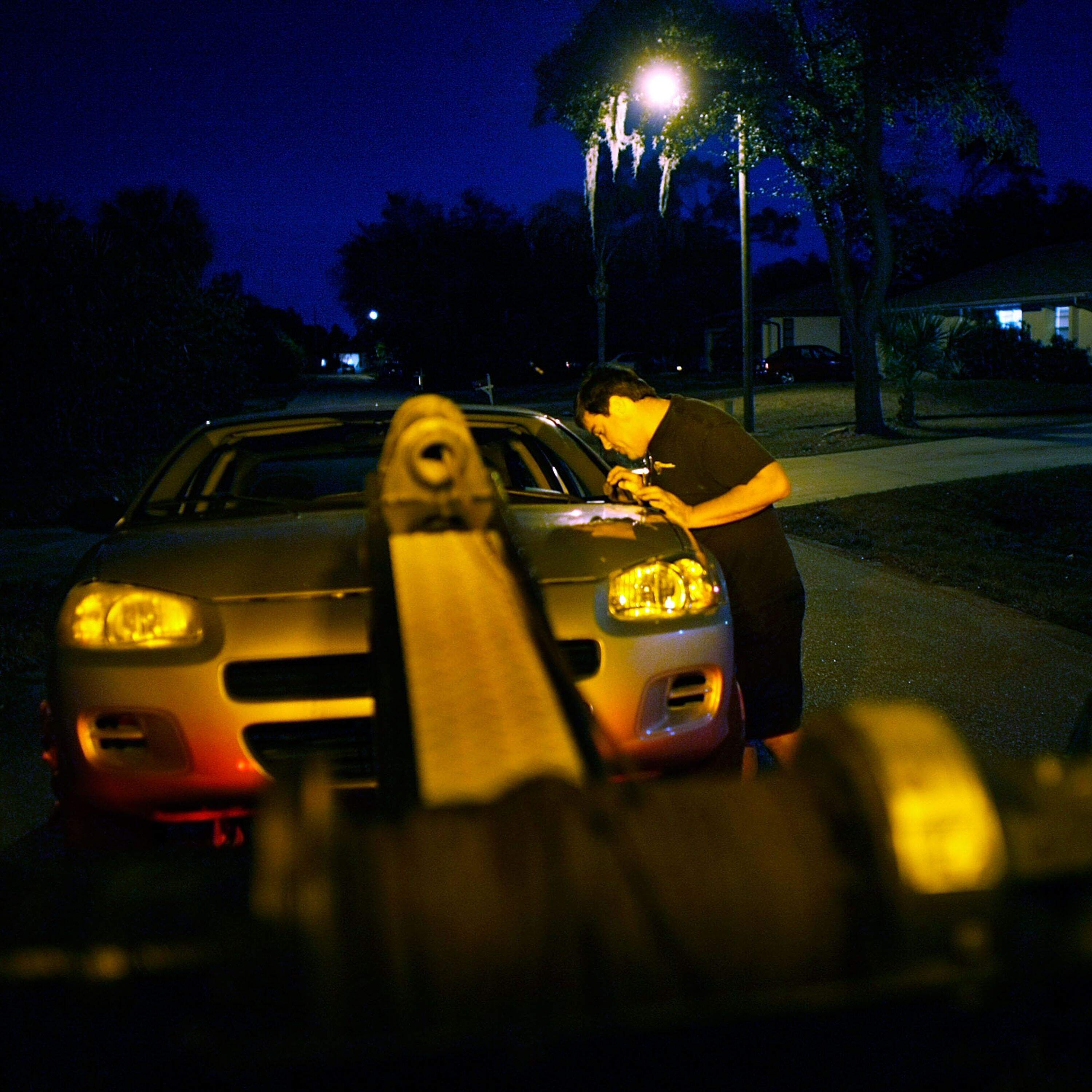
Planet Money book tour ticket info and dates here. A record number of Americans with poor or just okay credit are behind on their car payments. And once last year’s numbers are tallied, an estimated 3 million cars will have been repossessed in 2025. That would be on par with how bad it got during the Great Recession. What’s going on? And why now? Today on the show, we focus on the micro part of the story to answer the macro question. First, we hear a favorite story of ours from 2019. We follow the lifecycle of a delinquent car loan from three different perspectives: the salesman, the driver, and the repo man. Then we’ll hear an update from them in 2026 as we try to find out why so many Americans are behind on their car payments. It was originally produced by Darian Woods and edited by Bryant Urstadt. Our update was reported by Vito Emanuel and produced by Sam Yellowhorse Kesler, and edited by Planet Money ’s executive producer, Alex Goldmark. To manage podcast ad preferences, review the links below: See pcm.adswizz.com for information about our collection and use of personal data for sponsorship and to manage your podcast sponsorship preferences. Learn more about sponsor message choices: podcastchoices.com/adchoices NPR Privacy Policy
29min•Feb 4, 2026
Can Trump make buying a home more affordable?

Can Trump make buying a home more affordable?

Book tour dates and ticket info here. Housing is too expensive. Everyone knows this. Democrats know that talking about it plays well with voters. And now – in a midterm election year – President Donald Trump seems to be focused on it, too. His administration has recently started talking more about affordability. And they’re taking action with two new initiatives that aim to make buying a house easier. Today on the show, we’re gonna take a close look at these two moves. And ask: Will they work? It was edited by Marianne McCune, fact-checked by Sierra Juarez, and engineered by Jimmy Keeley and Cena Loffredo. Alex Goldmark is our executive producer. Music: NPR Source Audio - "No Problem,” “Fruit Salad,” “Checking In” and “Day Dreamer.” To manage podcast ad preferences, review the links below: See pcm.adswizz.com for information about our collection and use of personal data for sponsorship and to manage your podcast sponsorship preferences. Learn more about sponsor message choices: podcastchoices.com/adchoices NPR Privacy Policy
27min•Jan 31, 2026
Can transforming neighborhoods help kids escape poverty?

Can transforming neighborhoods help kids escape poverty?

In the 1990s, Congress created HOPE VI, a program that demolished old public housing projects and replaced them with more up-to-date ones. But the program went further than just improving public housing buildings. HOPE VI was designed to transform neighborhoods with concentrated poverty into neighborhoods that attracted people with different incomes. Some people who moved to HOPE VI neighborhoods earned too much to qualify for public housing. And some even paid for market-rate housing. The idea was that this would help create new opportunities for the low-income people who lived there and even lift people out of poverty. For years though, there wasn’t a clear answer to whether this approach actually succeeded. A new working paper from Raj Chetty and the team at Opportunity Insights finally provides some answers. On today’s show: Who really benefits when people living in poverty are more connected to their surrounding communities? Are there lessons from the HOPE VI experiment that could apply to other kinds of policies aimed at fostering upward mobility? More about Opportunity Insights’ study and a link to their interactive map here. Pre-order the Planet Money book and get a free gift. / Subscribe to Planet Money+ Listen free: Apple Podcasts, Spotify, the NPR app or anywhere you get podcasts. Facebook / Instagram / TikTok / Our weekly Newsletter. To manage podcast ad preferences, review the links below: See pcm.adswizz.com for information about our collection and use of personal data for sponsorship and to manage your podcast sponsorship preferences. Learn more about sponsor message choices: podcastchoices.com/adchoices NPR Privacy Policy
27min•Jan 28, 2026
A trip to the magic mushroom megachurch

A trip to the magic mushroom megachurch

Book tour dates and ticket info here. Just as every market has its first movers, every religion has its martyrs — the people willing to risk everything for what they believe. Pastor Dave Hodges just might be a little bit of both. He’s the spiritual leader of the Zide Door Church of Entheogenic Plants, in Oakland, California which places psilocybin mushrooms at the center of their religious practice. Today on the show, like its 130,000+ members, we’re going to take a trip through the psychedelic mushroom megachurch. We’ll meet one of the lawyers trying to keep psychedelic religious leaders like Pastor Dave from running afoul of the law, and get a peek into how the government decides whether a belief system counts as sincere religion. This episode was reported with support from The Ferriss – UC Berkeley Psychedelic Journalism Fellowship. It was produced by Sam Yellowhorse Kesler and edited by Eric Mennel. It was fact checked by Sierra Juarez and engineered by Kwesi Lee with help from Robert Rodriguez. Alex Goldmark is Planet Money ’s executive producer. To manage podcast ad preferences, review the links below: See pcm.adswizz.com for information about our collection and use of personal data for sponsorship and to manage your podcast sponsorship preferences. Learn more about sponsor message choices: podcastchoices.com/adchoices NPR Privacy Policy
31min•Jan 24, 2026
BOARD GAMES 3: What’s in a name?

BOARD GAMES 3: What’s in a name?

Planet Money has teamed up with the company Exploding Kittens to make a board game inspired by the legendary economics paper The Market for Lemons. We’ve decided we want a mass-appeal party game that quietly sneaks in the economics, so that we can report from inside a world that no other Planet Money project has entered: the real shelves at real big box retail stores. We have a great game mechanic and a set of rules. Now all we need is a good name and theme. Turns out, that is way harder and way higher stakes than any of us could have imagined. In the third episode of our series, we learn the importance of a good game name and theme and try to come up with one for our game. Pre-order the Planet Money book and get a free gift. / Subscribe to Planet Money+ Listen free: Apple Podcasts, Spotify, the NPR app or anywhere you get podcasts. Facebook / Instagram / TikTok / Our weekly Newsletter. This episode of Planet Money was hosted by Kenny Malone and Erika Beras. It was produced by James Sneed and edited by Marianne McCune, fact-checked by Willa Rubin, and engineered by Cena Loffredo and Kwesi Lee. Alex Goldmark is our executive producer. To manage podcast ad preferences, review the links below: See pcm.adswizz.com for information about our collection and use of personal data for sponsorship and to manage your podcast sponsorship preferences. Learn more about sponsor message choices: podcastchoices.com/adchoices NPR Privacy Policy
36min•Jan 22, 2026
Chevron, Venezuela and the Paradox of Plenty

Chevron, Venezuela and the Paradox of Plenty

Venezuela and Chevron have perhaps one of the strangest partnerships … ever? Chevron, one of the world’s most famous and profitable oil corporations, has for decades, been plugging away in Venezuela, one of the world’s most famous and infamous socialist countries. Today on the show, the story of their intertwined histories. Before Saudi Arabia, before Iran… there was Venezuela, the first petrostate. The first country whose entire economy became dependent on oil. With the blessing of oil, an entire economic textbook of complications opened up: from the Dutch Disease, to the resource curse, to mono-economic vulnerability. And, oddly, along for that ride…Chevron. Pre-order the Planet Money book and get a free gift. / Subscribe to Planet Money+ Listen free: Apple Podcasts, Spotify, the NPR app or anywhere you get podcasts. Facebook / Instagram / TikTok / Our weekly Newsletter. This episode of Planet Money was hosted by Erika Beras and Kenny Malone. It was produced by Luis Gallo with help from Sam Yellowhorse Kesler. It was edited by Marianne McCune, fact-checked by Sierra Juarez and engineered by Cena Loffredo. Alex Goldmark is our executive producer. To manage podcast ad preferences, review the links below: See pcm.adswizz.com for information about our collection and use of personal data for sponsorship and to manage your podcast sponsorship preferences. Learn more about sponsor message choices: podcastchoices.com/adchoices NPR Privacy Policy
33min•Jan 17, 2026
How much money President Trump and his family have made

How much money President Trump and his family have made

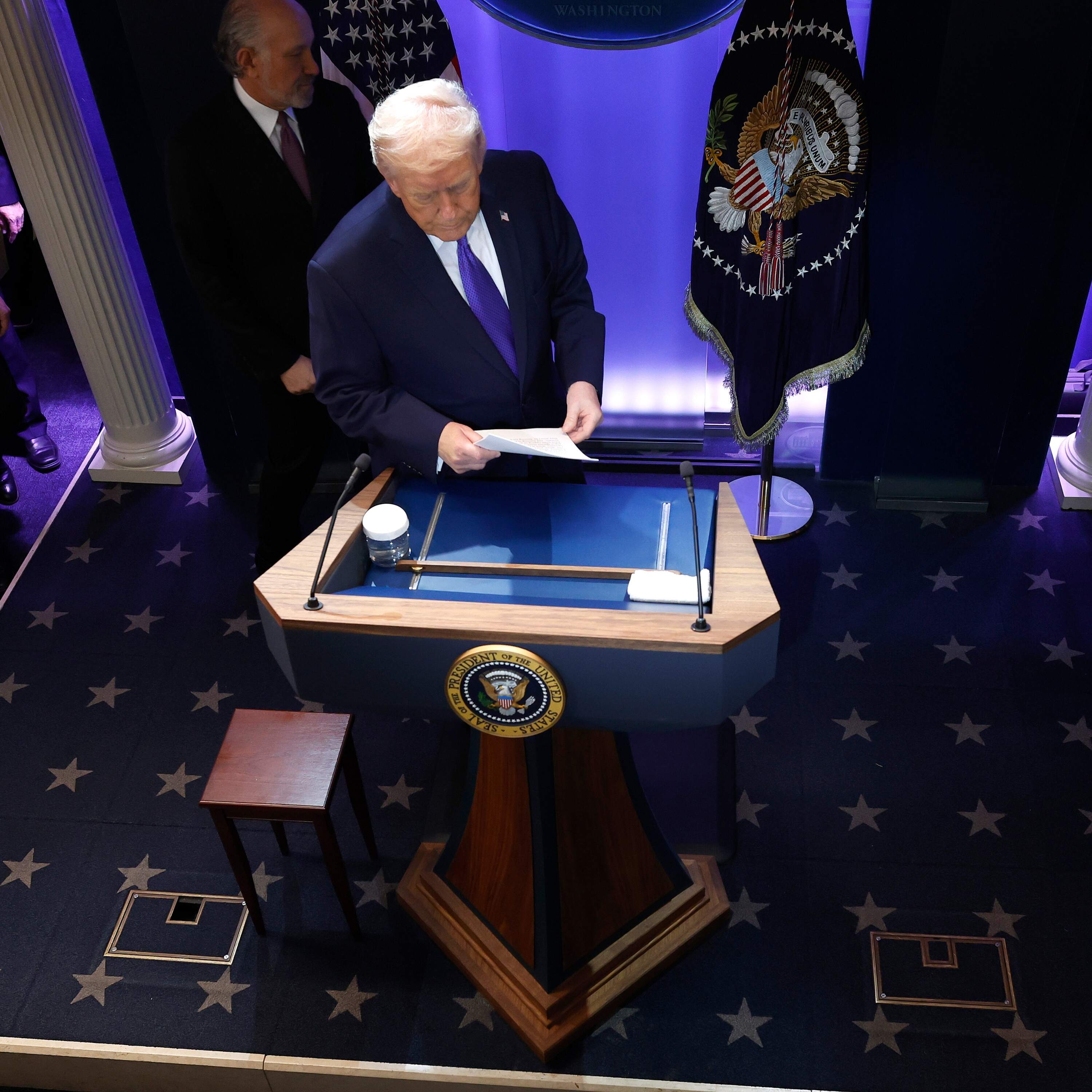
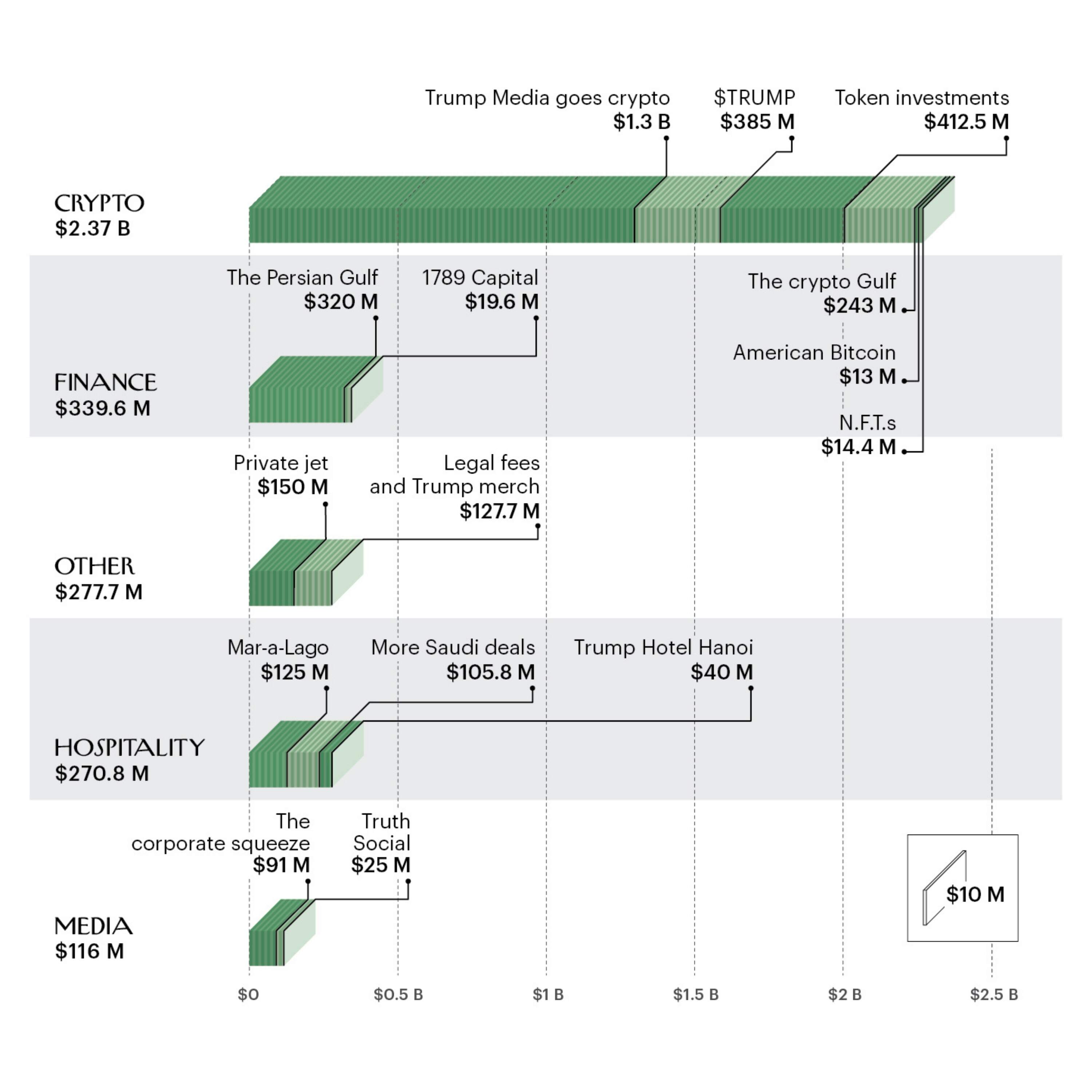
Before President Donald Trump’s first term, he was in a “tight spot” financially, according to New Yorker writer David Kirkpatrick. At the start of his second term, David says, Trump was in an “even tighter” spot. But after just six months into his second term, Trump’s financial situation started looking really good. David has done a full accounting for what the family has been up to, and even using conservative estimates, David says Trump and his family have made almost $4 billion dollars “off of the presidency,” in just about a year. Today on the show: we look at every new business and business deal and financial transaction that David says likely would not have happened if Trump wasn’t the president of the United States. And we stop at the most innovative ways Trump and his family have made all that. Pre-order the Planet Money book and get a free gift. / Subscribe to Planet Money+ Listen free: Apple Podcasts, Spotify, the NPR app or anywhere you get podcasts. It was produced by James Sneed, edited by Jess Jiang, and fact checked by Sierra Juarez. Robert Rodriguez engineered it. Alex Goldmark is our executive producer. To manage podcast ad preferences, review the links below: See pcm.adswizz.com for information about our collection and use of personal data for sponsorship and to manage your podcast sponsorship preferences. Learn more about sponsor message choices: podcastchoices.com/adchoices NPR Privacy Policy
30min•Jan 14, 2026
So are we in an AI bubble? Here are clues to look for.

So are we in an AI bubble? Here are clues to look for.

Are we in an AI bubble? That’s the $35 trillion dollar question right now as the stock market soars higher and higher. The problem is that bubbles are famously hard to spot. But some economists say they may have found some telltale clues. On our latest: How do economists detect a bubble? And, how much should society be worried about bubbles in the first place? Related shows: - How to make $35 trillion... disappear - What is a bubble? (featuring Nobel prize winning economics Eugene Fama and Robert Shiller) - What AI data centers are doing to your electric bill Pre-order the Planet Money book and get a free gift. / Subscribe to Planet Money+ Listen free: Apple Podcasts, Spotify, the NPR app or anywhere you get podcasts. Facebook / Instagram / TikTok / Our weekly Newsletter. This episode was produced by Willa Rubin and edited by Marianne McCune. It was fact-checked by Sierra Juarez and engineered by Cena Loffredo and Robert Rodriguez. Alex Goldmark is our executive producer. Music: NPR Source Audio - “The best is yet to come,” “Marsh mellow,” and “Sunshine beat” To manage podcast ad preferences, review the links below: See pcm.adswizz.com for information about our collection and use of personal data for sponsorship and to manage your podcast sponsorship preferences. Learn more about sponsor message choices: podcastchoices.com/adchoices NPR Privacy Policy
24min•Jan 10, 2026
How Black hair care grew Black power

How Black hair care grew Black power

The Afro is one of the most iconic hairstyles of the last century. And one of its main ingredients was a hair product – Afro Sheen. But Afro Sheen did so much more than make Black afros shine. It was the money behind the television show Soul Train, it helped fuel the civil rights movement – all because of an entrepreneur named George Johnson. For decades, Joan and George Johnson owned and ran Johnson Products Company, a Black hair care company out of Chicago. Their intimate understanding of what Black people wanted and needed – for their hair and for their lives – helped grow the Black middle class and became an engine for Black culture and power. They helped turn the Black haircare industry into what is now a multi-billion-dollar industry. But although they helped create this industry, they no longer have a part in it. Today on the show – the story of the rise and fall of Johnson Products. We’re gonna tell you this story in three hairstyles. The conk, the afro… and the jheri curl. Related episodes: This Ad’s For You 'Soul Train' and the business of Black joy Fashion Fair's makeover Pre-order the Planet Money book and get a free gift. / Subscribe to Planet Money+ Listen free: Apple Podcasts, Spotify, the NPR app or anywhere you get podcasts. Facebook / Instagram / TikTok / Our weekly Newsletter. This episode of Planet Money was hosted by Sonari Glinton and Erika Beras. It was produced by James Sneed, edited by Marianne McCune, fact-checked by Sierra Juarez, and engineered by Jimmy Keeley. Alex Goldmark is Planet Money’s executive producer. To manage podcast ad preferences, review the links below: See pcm.adswizz.com for information about our collection and use of personal data for sponsorship and to manage your podcast sponsorship preferences. Learn more about sponsor message choices: podcastchoices.com/adchoices NPR Privacy Policy
29min•Jan 7, 2026
1 / 18